

Volatility Pulse - Tech marches to its own drum
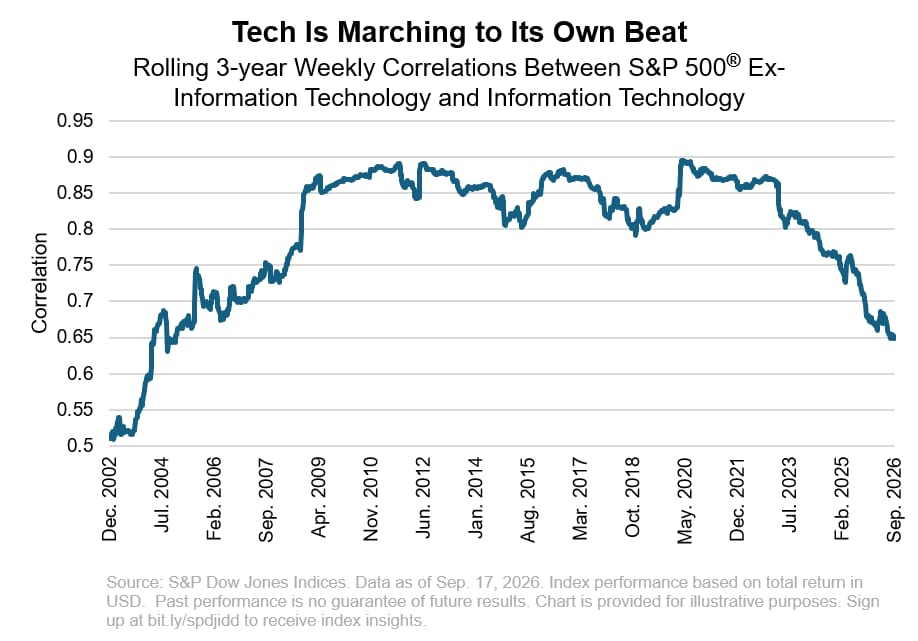
Tech stopped moving with the rest of the market
The three-year correlation between the S&P's technology sector and the S&P excluding technology has fallen to 0.65, the lowest reading in more than twenty years. The last time the two agreed this little, the dot-com bust was still clearing.
Source: S&P Dow Jones Indices
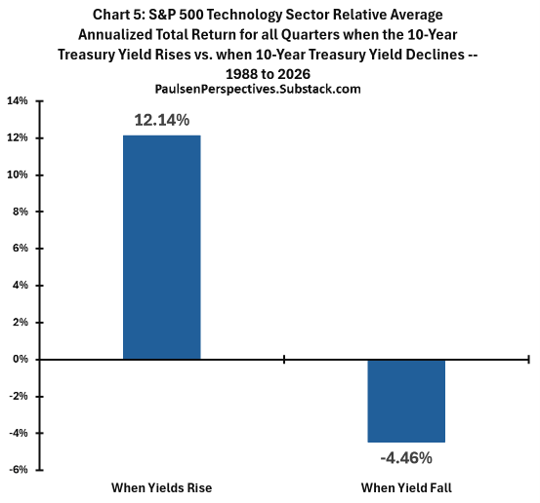
Rising rates were supposed to be bad for tech
Across every quarter since 1988, technology beat the market by 12.14% annualized when the 10-year yield rose, and lagged by 4.46% when it fell. The relationship runs the opposite way to the one everybody repeats.
Source: Paulsen Perspectives
Very different story than 2000
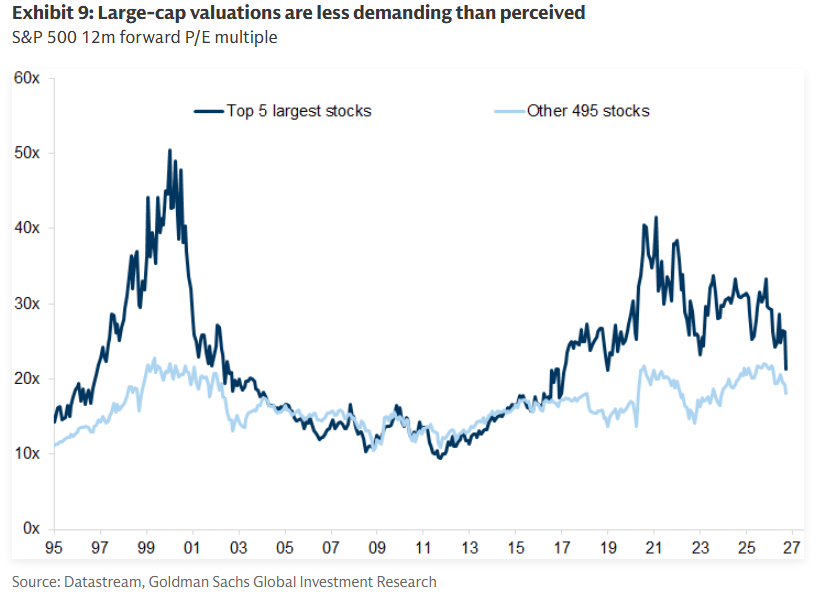
The five largest S&P 500 companies change hands at about 21 times forward earnings against 18 times for the other 495. In 2000 the top five got to 50 times.
Source: Goldman Sachs
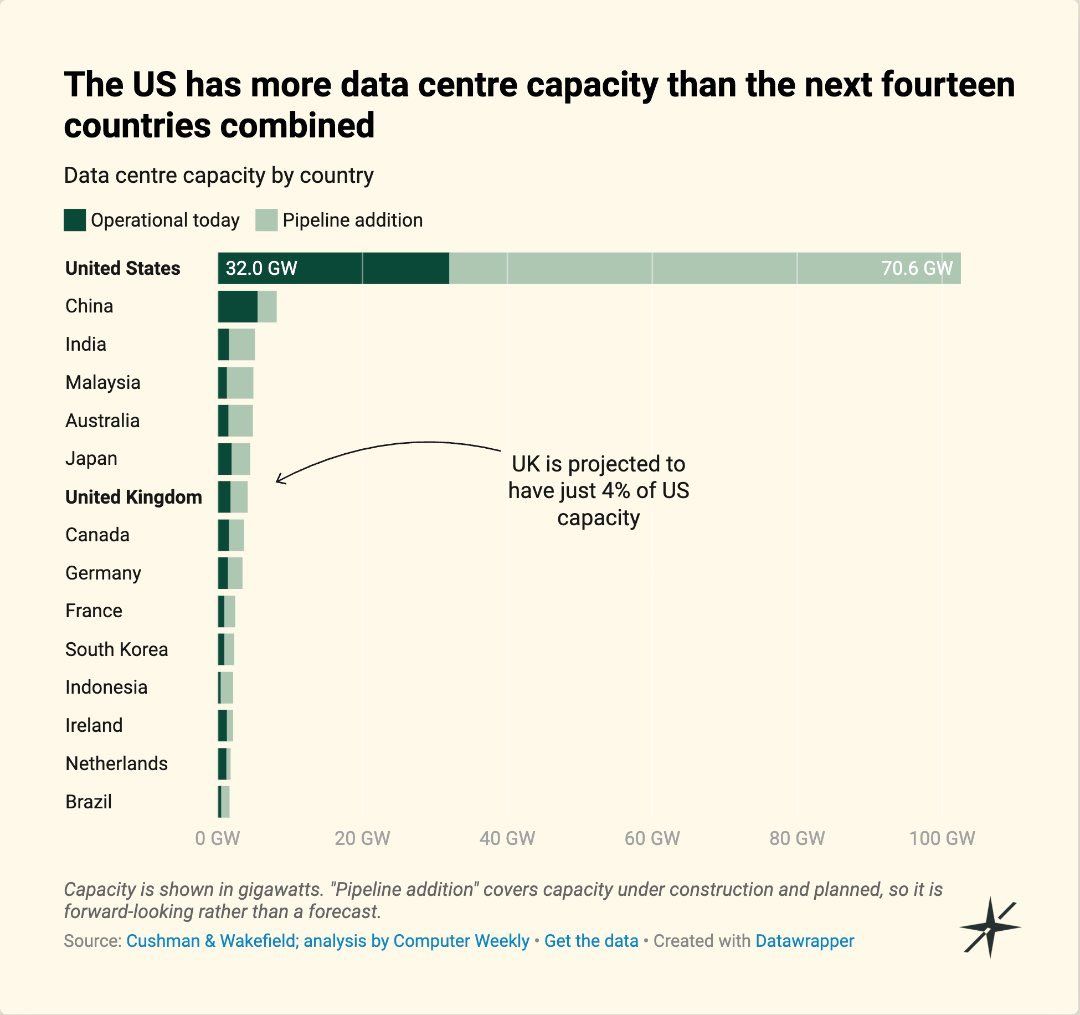
The US has more data centre capacity than the next fourteen countries combined
32 gigawatts are running today and another 70.6 gigawatts are under construction or planned. China is second, and the UK is on track for about 4% of the American total.
Source: Computer Weekly via Ernie Tedeschi
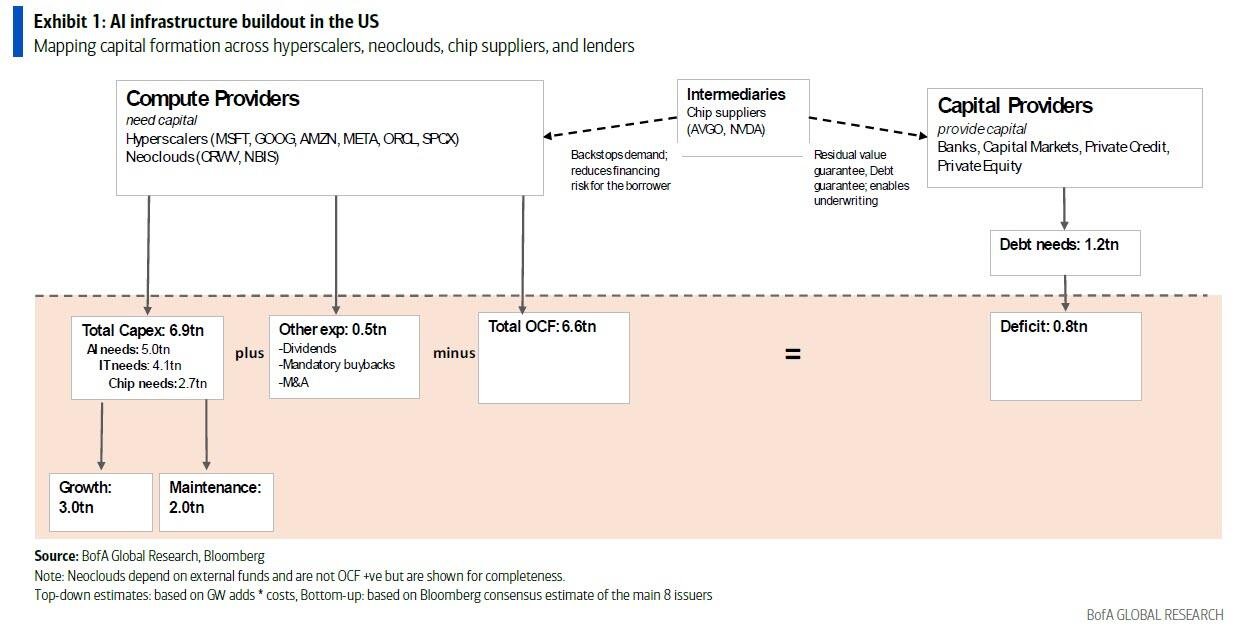
The AI buildout is $800 billion short
Capex of $6.9 trillion plus half a trillion of dividends, buybacks and deals, against $6.6 trillion of operating cash flow. The gap is $800 billion, and the debt required to close it is $1.2 trillion.
Source: BofA Global Research
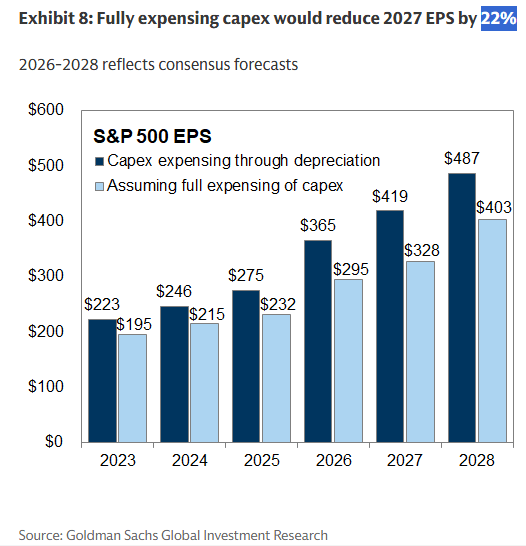
The earnings depend on how you count the spending
If capex were expensed in the year it was spent instead of depreciated, 2027 S&P 500 earnings would be $328 a share rather than $419. That is 22% of next year's profits sitting inside an accounting choice.
Source: Goldman Sachs
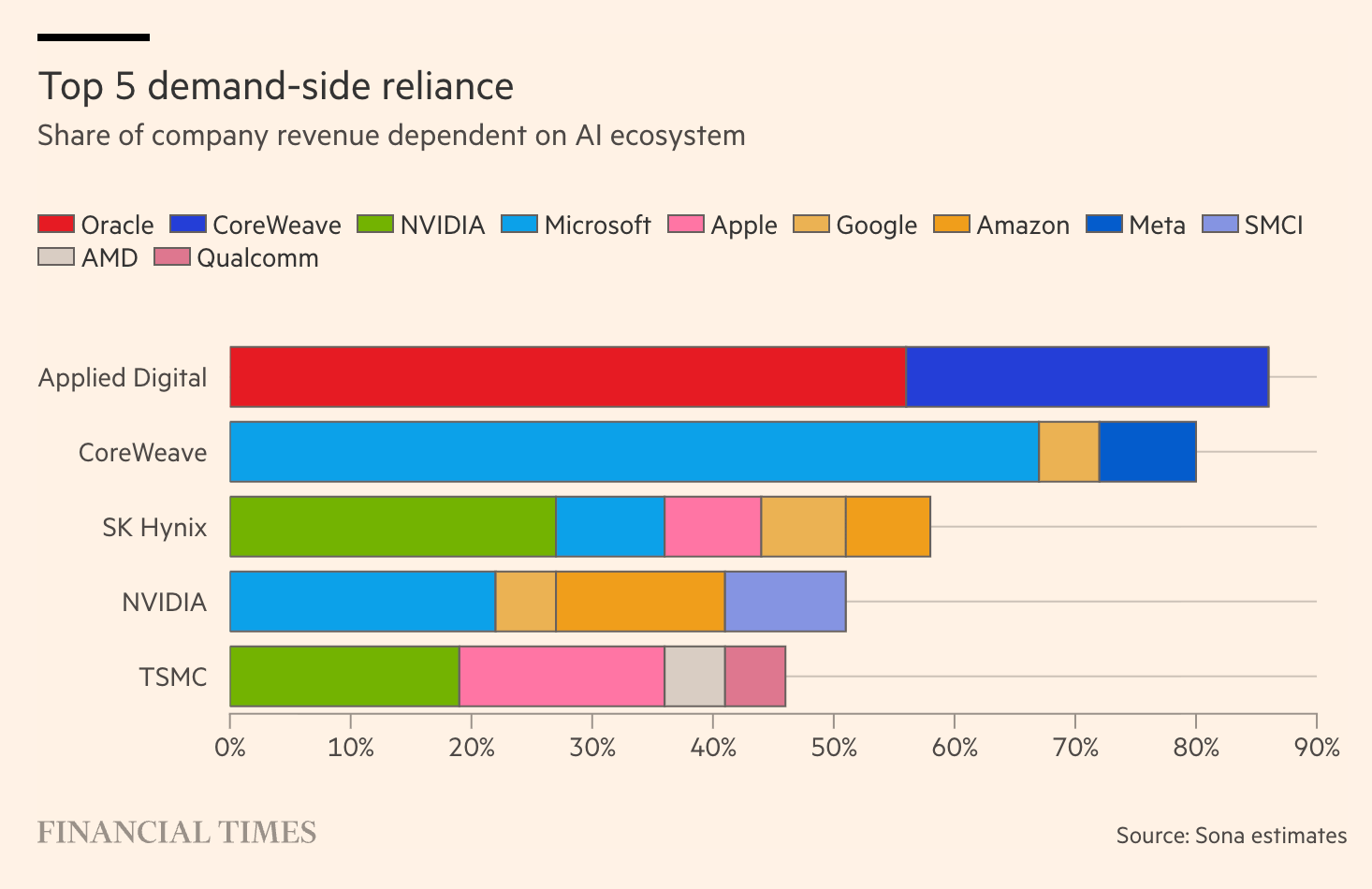
Customer Concentration
Microsoft is about 67% of CoreWeave's revenue and Oracle is 56% of Applied Digital's. Roughly half of Nvidia's own revenue traces back to five buyers.
Source: Financial Times
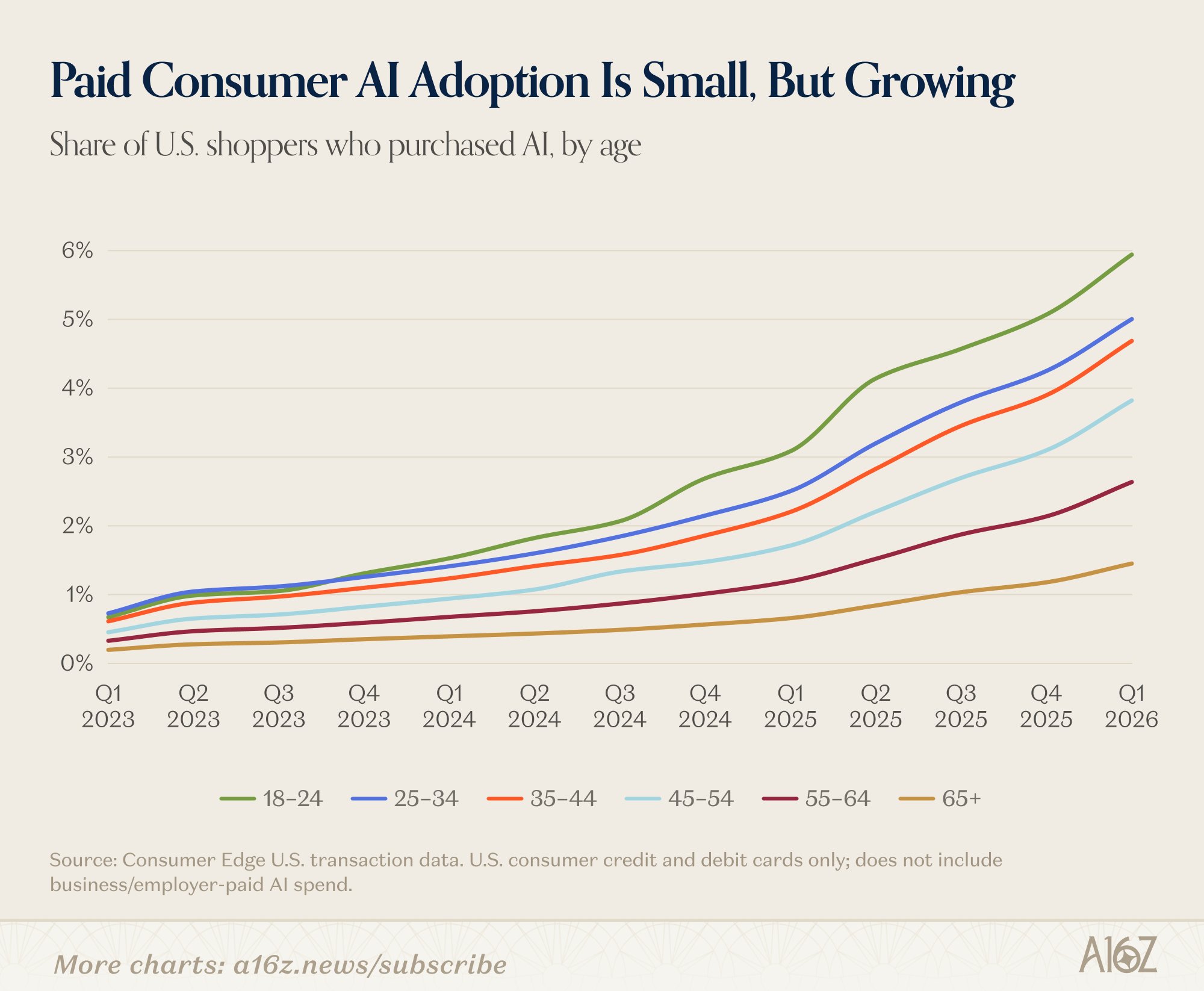
Almost nobody is paying for AI yet
Among American shoppers, 5.9% of 18 to 24 year olds pay for AI out of their own pocket. For the over 65s it is 1.4%. And that counts only what goes on a personal card, not what an employer buys.
Source: a16z
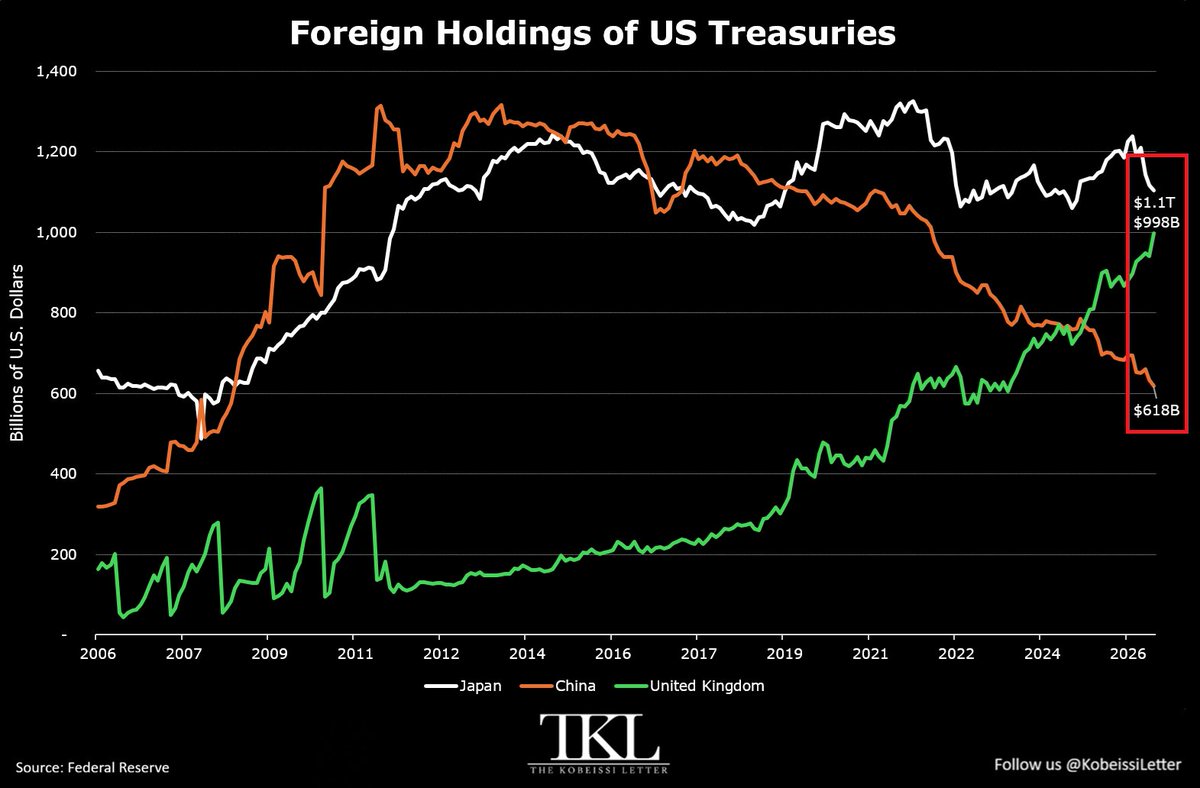
Britain lends America more than China does
The UK holds $998 billion of US Treasuries against China's $618 billion. China peaked above $1.3 trillion in 2013 and has more than halved since. Japan is still first at $1.1 trillion.
Source: The Kobeissi Letter
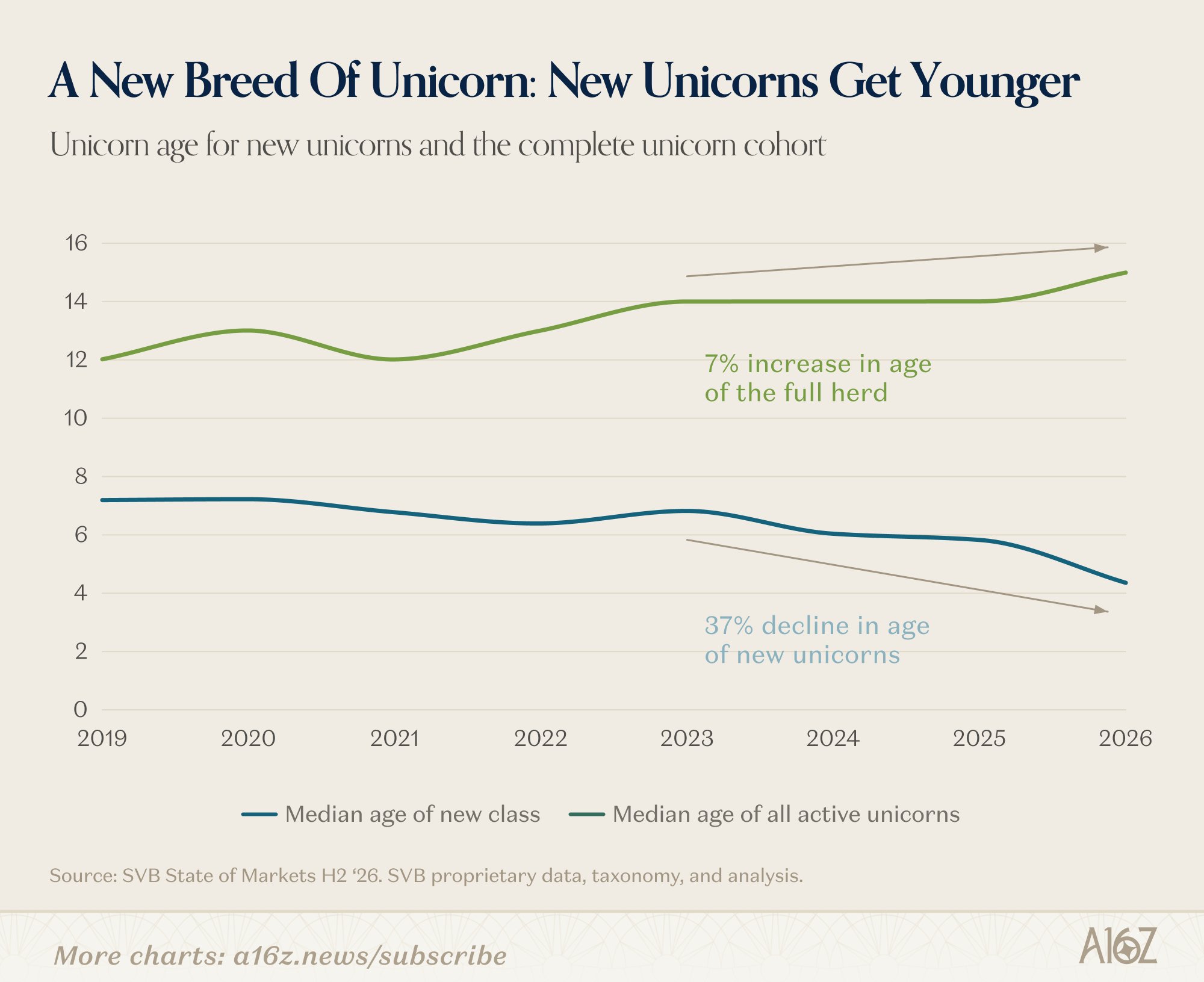
A unicorn takes four years now, not seven
The median new billion dollar startup is 4.3 years old, down 37% since 2023. The median unicorn overall has aged to 15, because getting in has become much faster than getting out.
Source: SVB via a16z
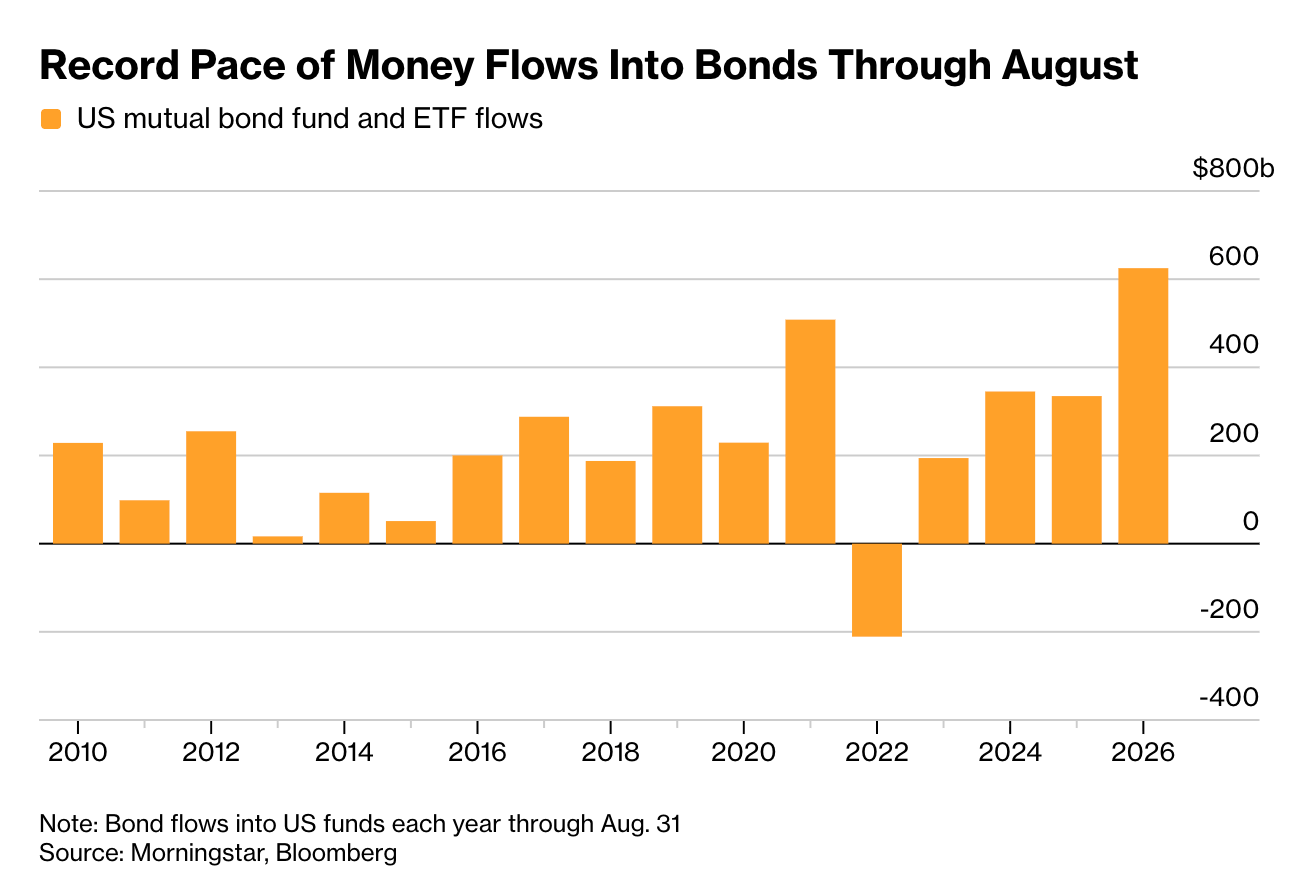
The money came back to bonds anyway
Through August, more went into US bond funds and ETFs than in any year since at least 2010, roughly $600 billion. The same measure was negative $260 billion in 2022.
Source: Bloomberg
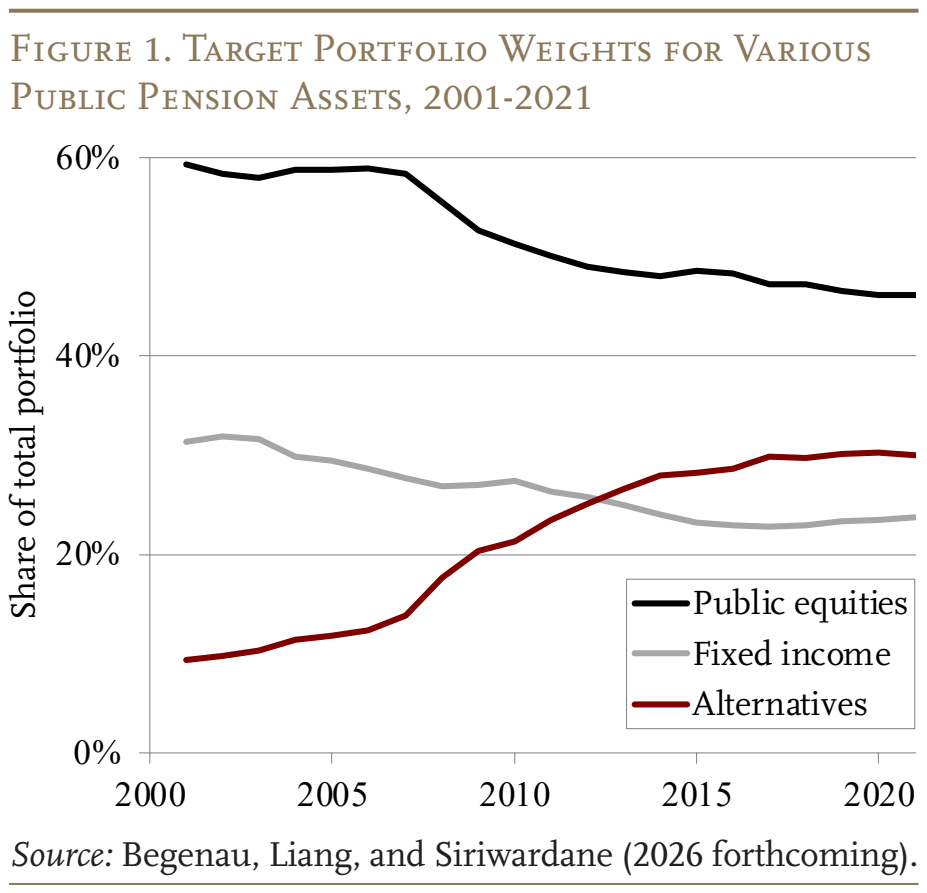
Pensions gave up on stocks and bonds both
Public pension plans held 59% in public equities and 31% in fixed income in 2001. By 2021 that was 46% and 24%, and alternatives had gone from 9% of the portfolio to 30%.
Source: Center for Retirement Research via Meb Faber
Just Because...
Mexico's Cave of 30-Foot Crystals
A cave discovered in 2000 beneath a Mexican mine turned out to be filled with gypsum pillars more than 30 feet long, among the largest natural crystals anyone has recorded. People are in there standing on crystals the size of tree trunks.