

RIA ideas - Passing the torch
Growth Note: US Banks (XLF / KRE)
Banks just made their first all-time high in nineteen years.
The S&P Bank Index just made its first all-time high since January 2007, a nineteen-year round trip, completed the same month chip stocks had one of their worst stretches in nearly two decades. And banks did it quietly: XLF trades at 18.3x trailing earnings and regional banks (KRE) at 14.0x, vs 27.7x for the S&P 500 (Yahoo Finance, 8/4/26).
The market appears to be broadening beyond the seven stocks everyone owns: micro caps are up about 21% this year while the Magnificent 7 are down about 4%, and equal-weight is beating cap-weight. A breakout after nineteen years is a different starting point than a trade already three years into its run, and fresh highs from a low multiple may leave more room to participate.
A 19-Year Round Trip, and the New Leaderboard
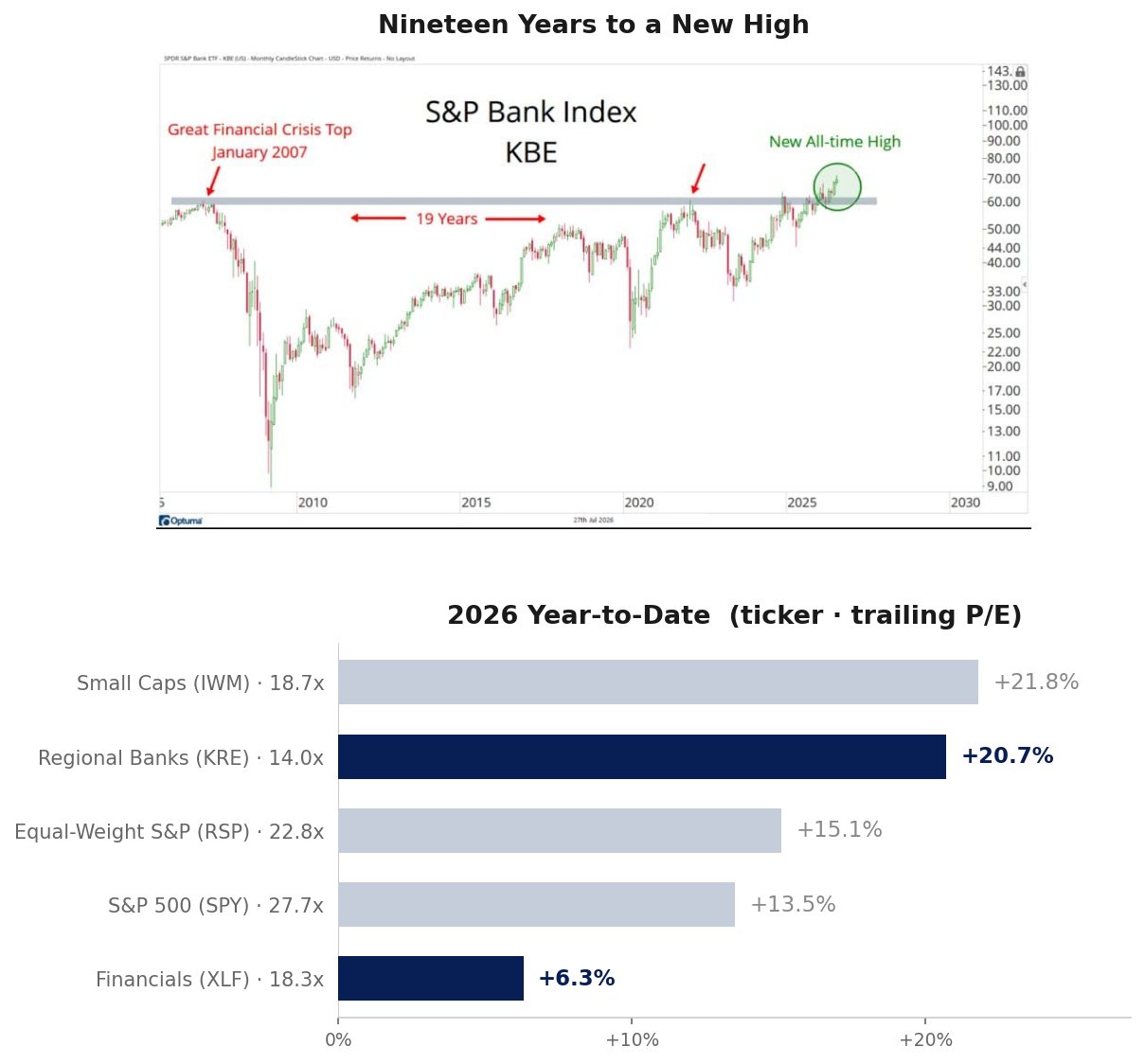
Chart: JC Parets. Data sourced from Bloomberg and Yahoo Finance as of 8/4/2026 · marinelayeradvisors.com/insights
Ways To Express A Constructive View
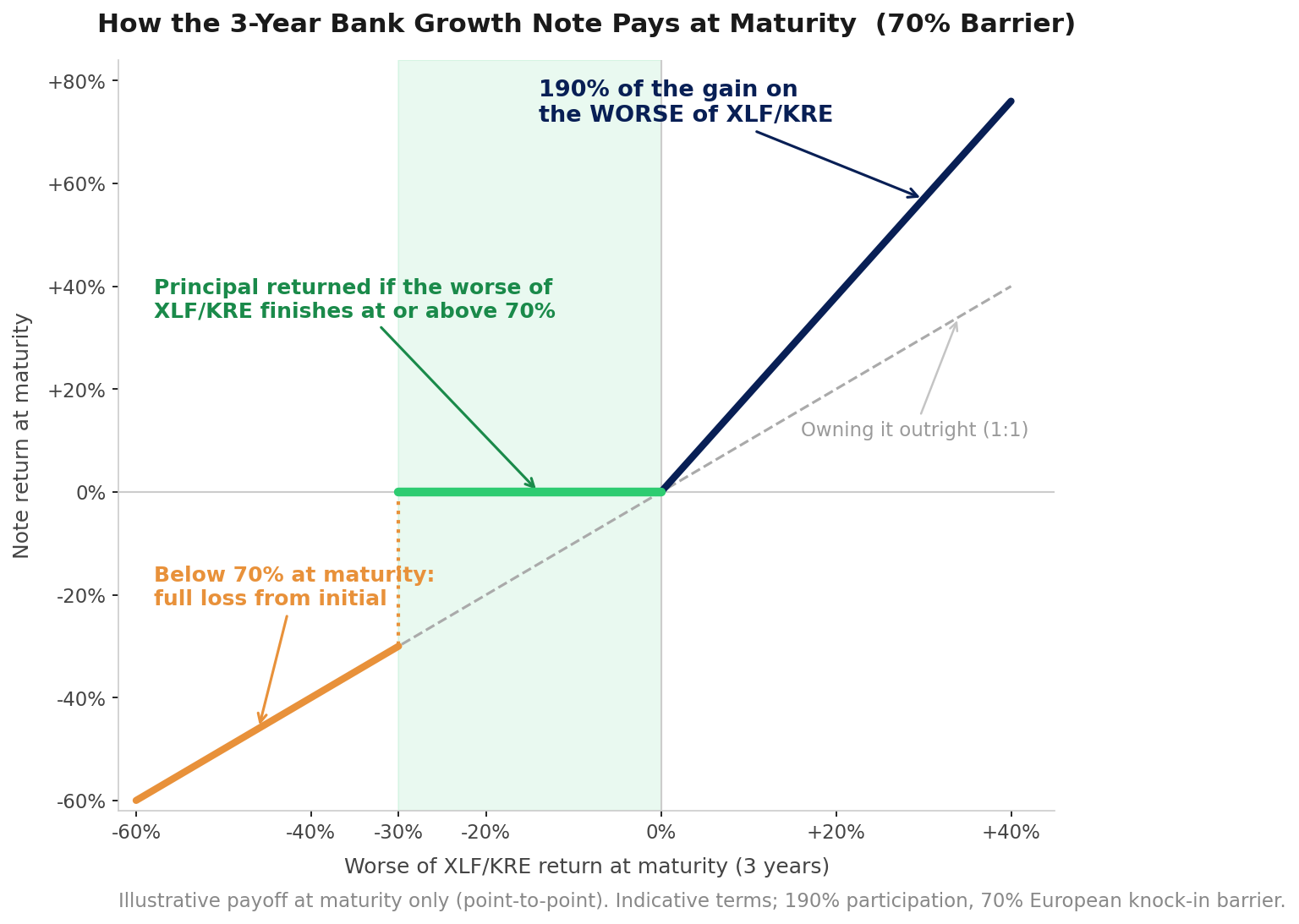
Bank Growth Note · 3 Years · Worst-of XLF / KRE · 190% Participation · 70% Barrier
190% of any gain in the worse performer of XLF and KRE over three years. At maturity, principal may be returned in full provided the worse performer hasn't fallen more than 30%; below the 70% barrier, the investor may participate in the full decline from the initial level.
Indicative levels only. Respond back and I'll get current terms from desk.
Here's how the growth note pays at maturity:
Want to see more thematic trades for your customers?
This material is for informational purposes only and does not constitute a recommendation. Chart by JC Parets; data sourced from Bloomberg and Yahoo Finance as of 8/4/2026 and has not been independently verified. Past performance is not indicative of future results. Structured notes involve risks including potential loss of principal. This note provides contingent principal protection only: if the worse underlier closes below the barrier at maturity, the investor is exposed to the full decline from the initial level. Structured note pricing is subject to issuer credit risk, market conditions, and availability at time of execution.