

RIA Ideas - Land of the Rising Value?
Growth Note: EWJ (Japan)
A 31% discount to the S&P 500, in a currency at 30-year lows.
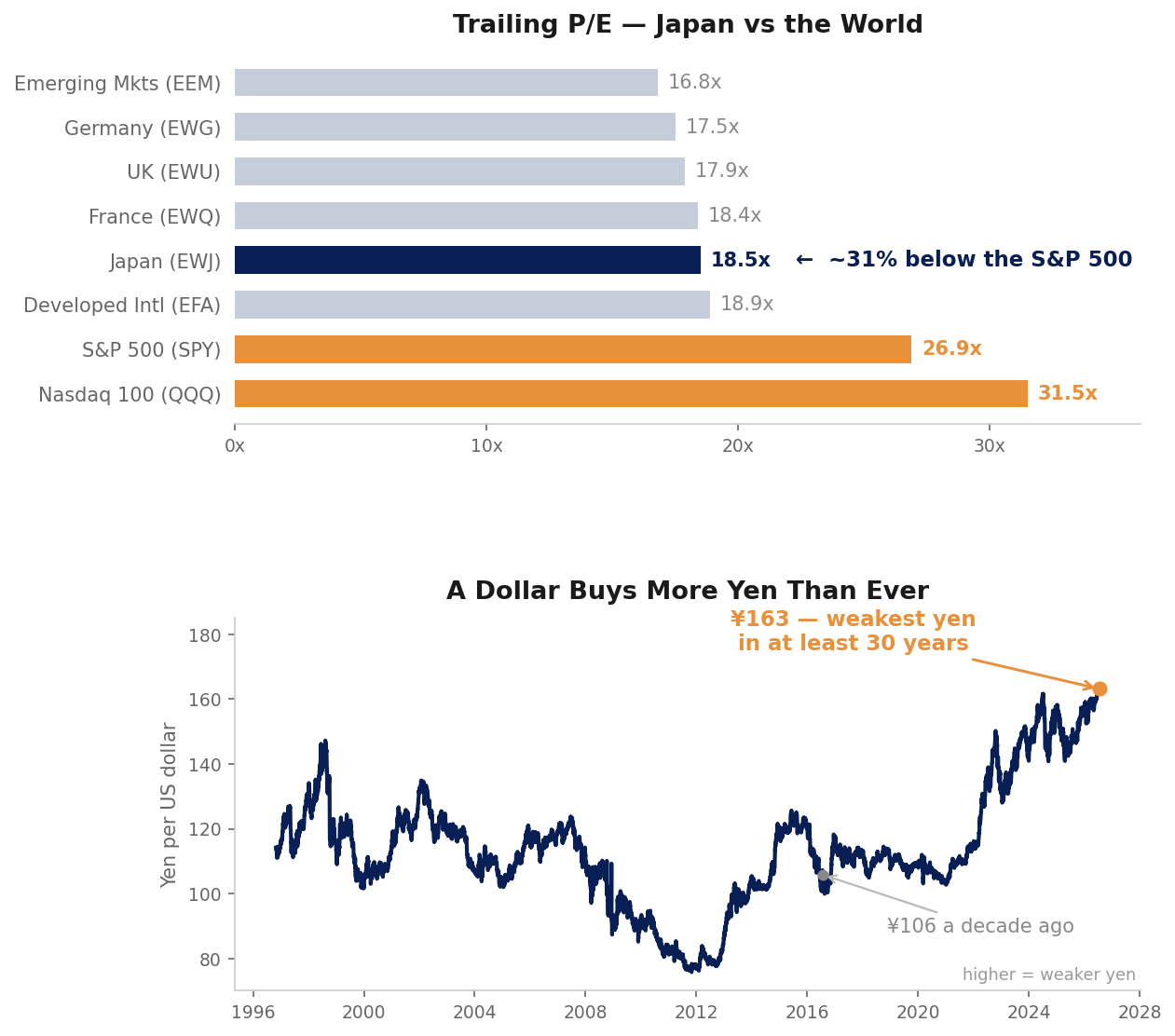
Deutsche Bank's annual global price study found Japan flipped from one of the world's most expensive economies to one of its cheapest in a single decade. Japanese stocks trade at 18.5x trailing earnings vs 26.9x for the S&P 500, and the yen just touched ¥163 per dollar, its weakest in at least 30 years (Yahoo Finance, 7/21/26).
Here's the part most advisors miss: EWJ is unhedged, so a dollar investor owns two things at once, Japanese stocks at a roughly 31% earnings-multiple discount to the S&P, and the yen itself (a dollar bought ¥106 ten years ago). If the yen recovers even part of that move, the currency gain could stack on top of whatever the stocks do. Futures positioning shows the largest short-yen bet since 2007; a reversal could be swift.
Japan vs the World: Valuations, and a Yen at 30-Year Lows
Data sourced from Yahoo Finance and Deutsche Bank as of 7/21/2026 · marinelayeradvisors.com/insights
One Way To Express A Constructive View
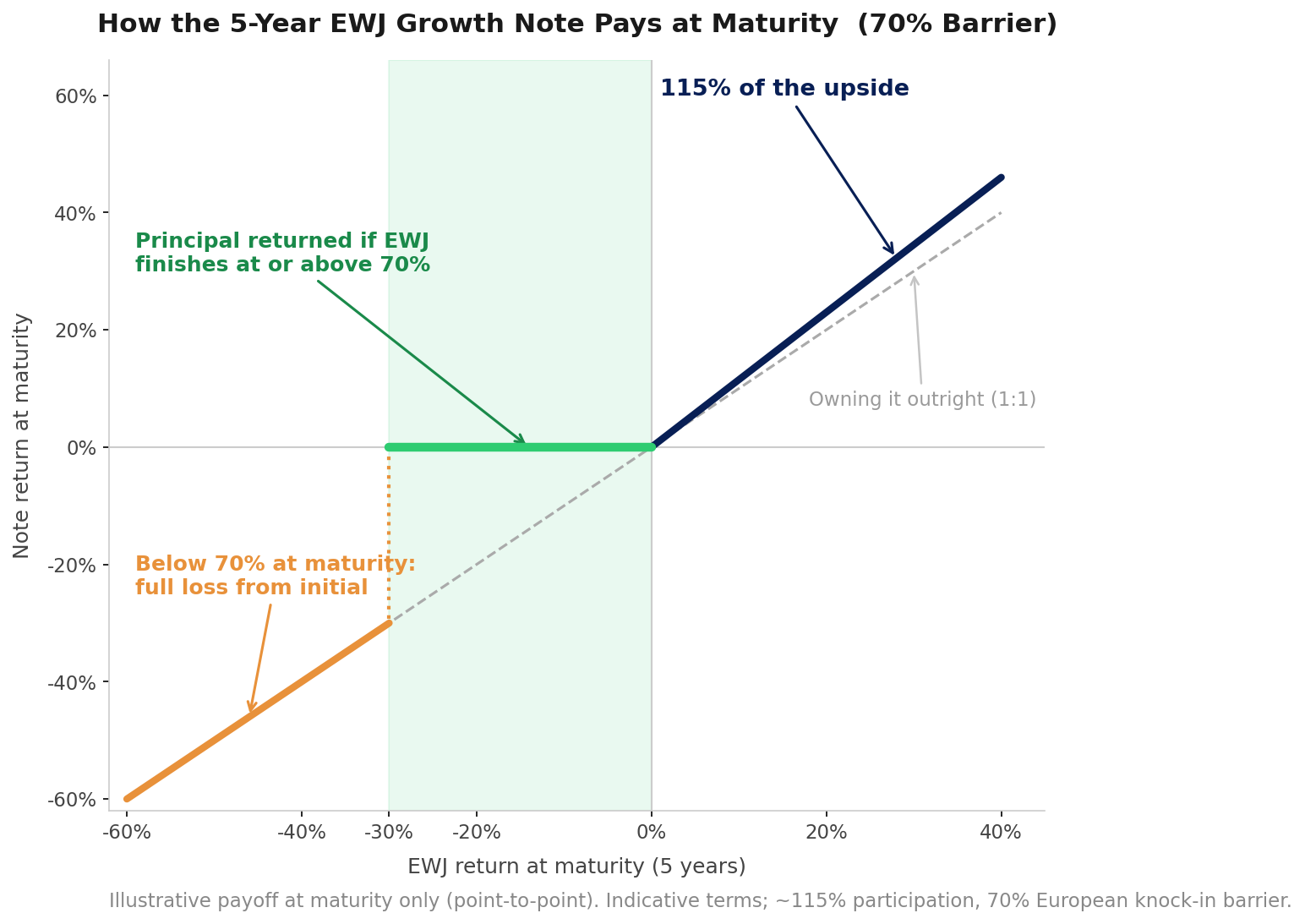
Growth Note · 5 Years · EWJ · 115% Participation · Uncapped · 70% Barrier
115% of any EWJ price gain over five years, uncapped. At maturity, principal may be returned in full provided EWJ hasn't fallen more than 30% from the initial level; below the barrier, the investor may participate in the full decline from the initial level.
Indicative levels only. Respond back and I'll get current terms from desk.
Here's how the note pays at maturity:
Want to see more thematic trades for your customers?
This material is for informational purposes only and does not constitute a recommendation. Data sourced from Yahoo Finance and Deutsche Bank ("Mapping the World's Prices," 2026) as of 7/21/2026 and has not been independently verified. Past performance is not indicative of future results. Structured notes involve risks including potential loss of principal. This note provides contingent principal protection only: if the underlying closes below the barrier at maturity, the investor is exposed to the full decline from the initial level. Unhedged international exposure involves currency risk; a weakening yen could reduce dollar-based returns. Structured note pricing is subject to issuer credit risk, market conditions, and availability at time of execution.