

Volatility Pulse - Animal Spirits or Animal Farm?
"Stock Pickers Market?"....nah
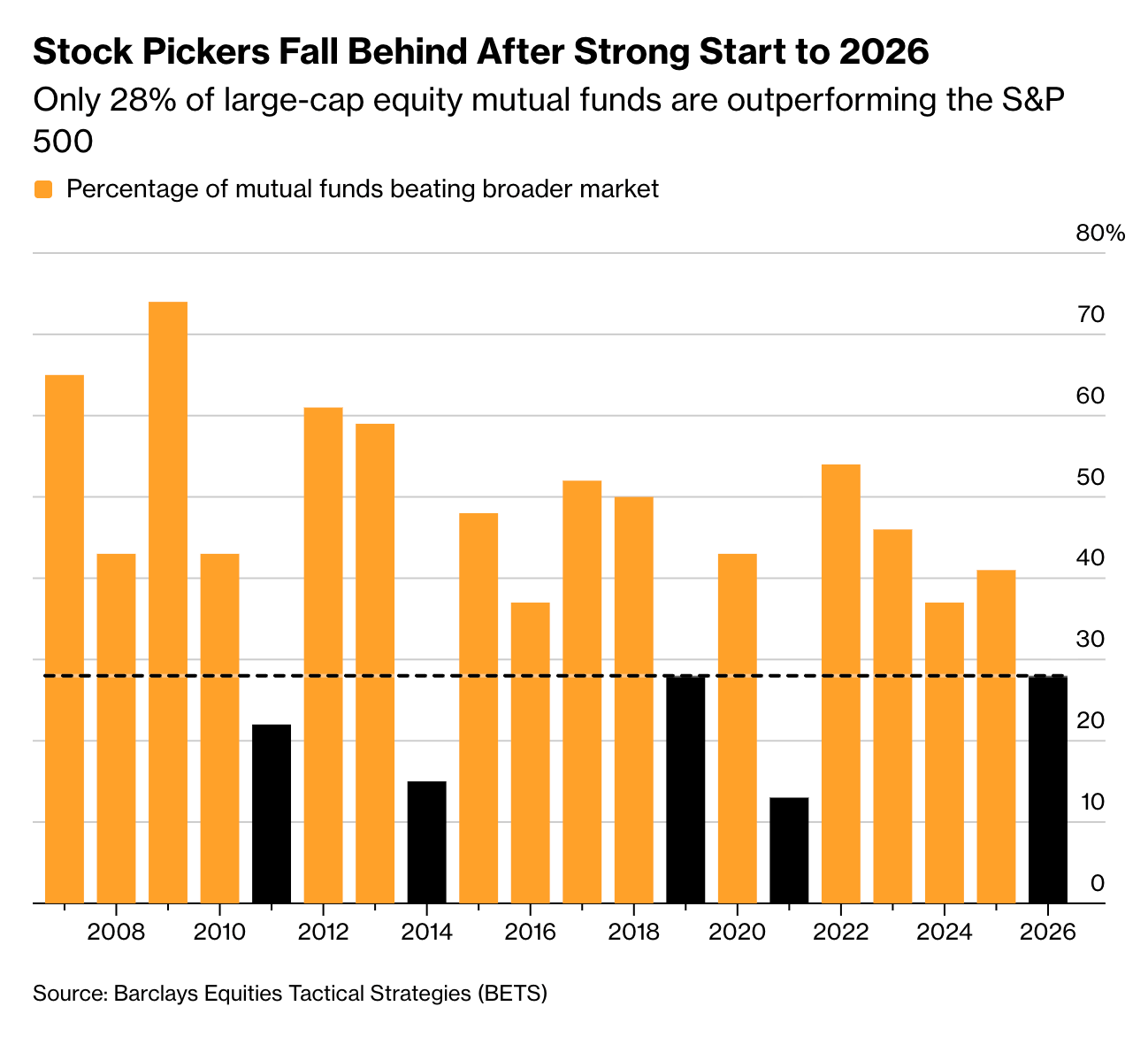
Only 28% of active mutual funds are beating the S&P 500 in 2026 — down from over 60% at the end of February — putting active managers on pace for their 4th-worst showing in 20 years relative to the benchmark. The index that nearly everyone is underperforming is also the one with historic breadth failures underneath.
Source: Goldman Sachs
Winners win
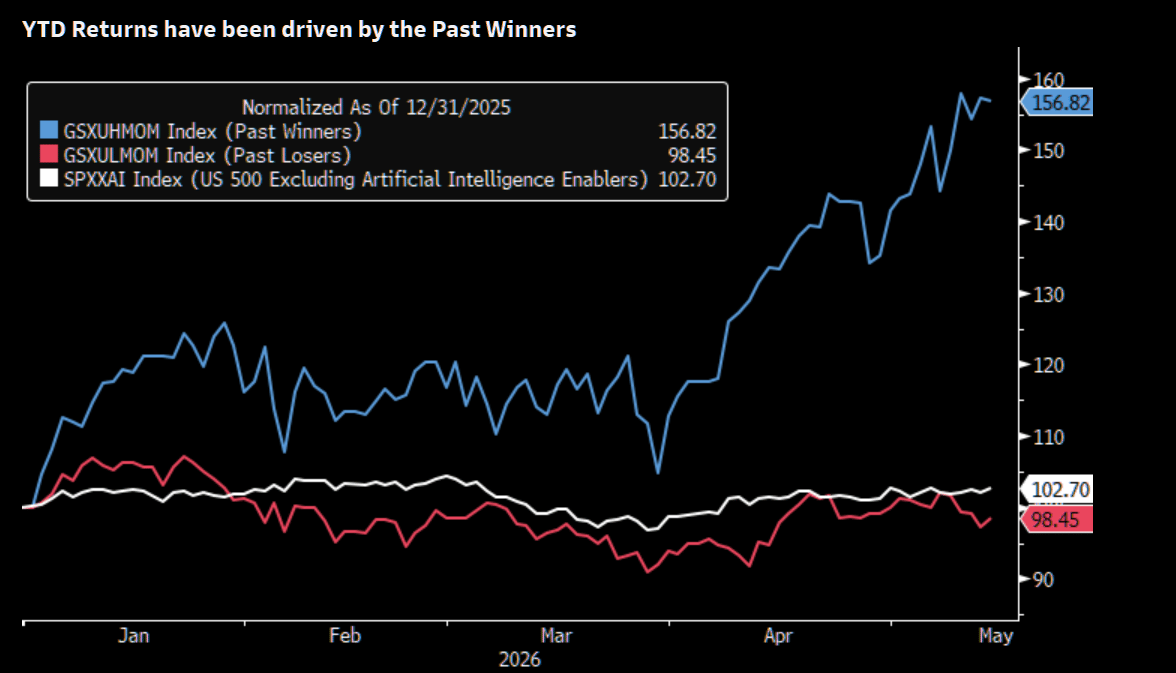
The momentum factor's entire outperformance in 2026 comes from Past Winners (+57% YTD), while Past Losers are down 1.5% — in line with the S&P 500 excluding AI. The rally isn't broad-based momentum. It's one very crowded trade pulling the entire index to record levels.
Source: Goldman Sachs
License to Sell, No Buyers
22 Days Overbought — A First
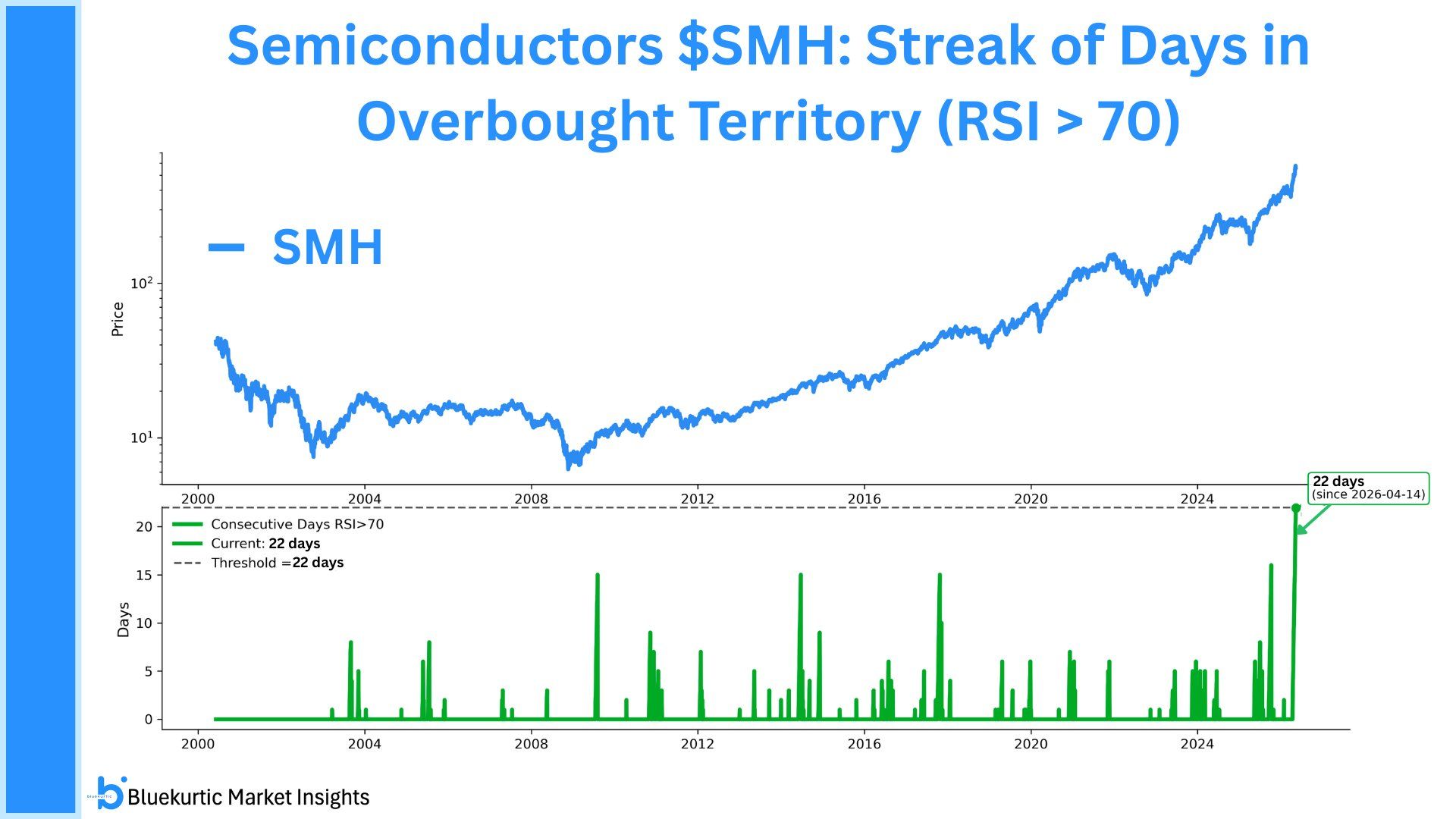
SMH stayed overbought for 22 consecutive days — the prior record was 16 days set just last year. The VanEck Semiconductor ETF had never done this before. On May 15, the streak ended: semi stocks saw their worst single-session performance in six weeks.
Source: Bloomberg
From 2% to 18% in a Decade
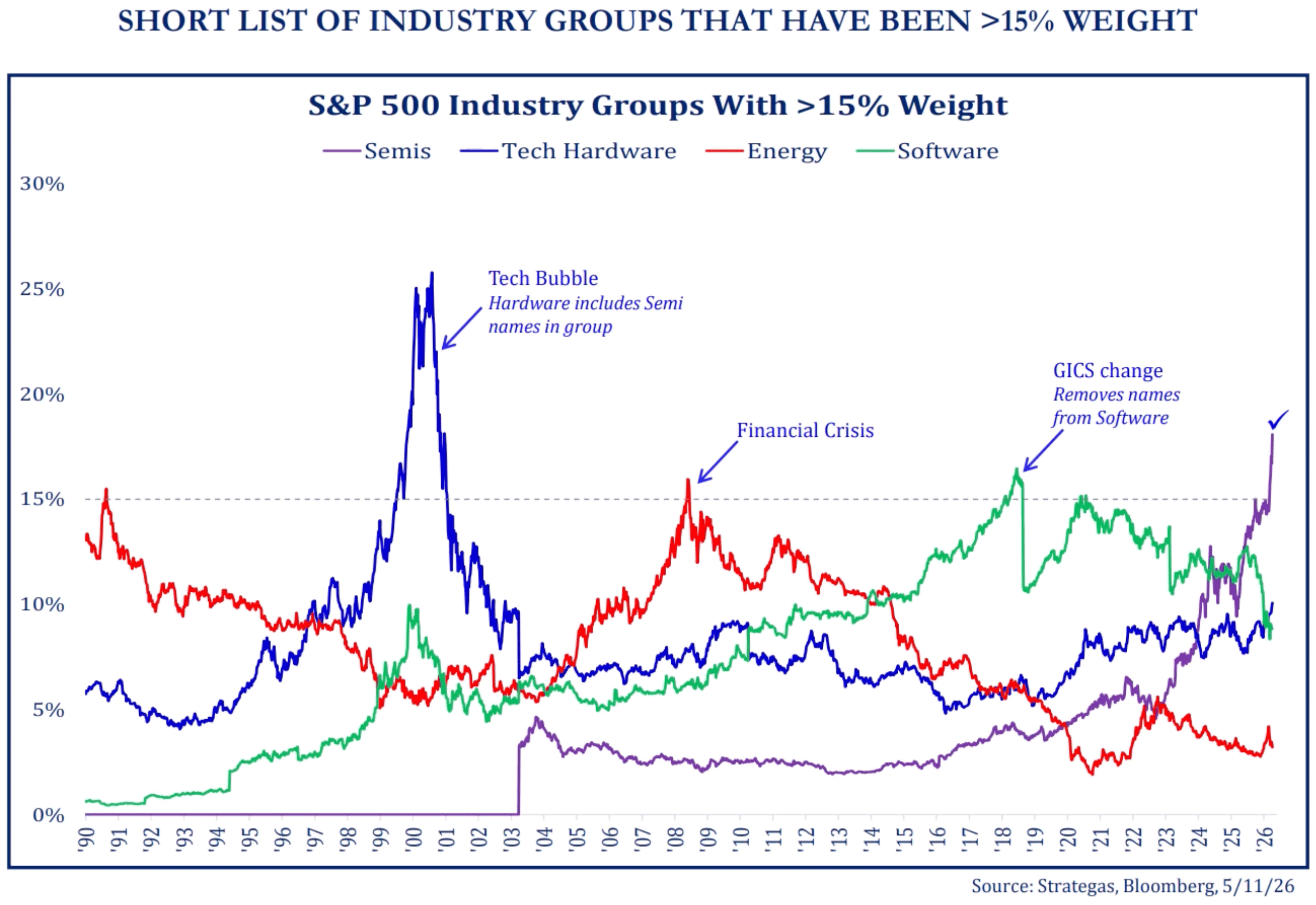
Semiconductors now sit at roughly 18% weight in the S&P 500 — up from 2% a decade ago. This is among a very short list of industry groups that have ever exceeded 15% of the index, and the only one that got there in under 10 years. The same sector that just triggered a China-driven selloff.
Source: Goldman Sachs
"Pros" Sold the Whole Rally
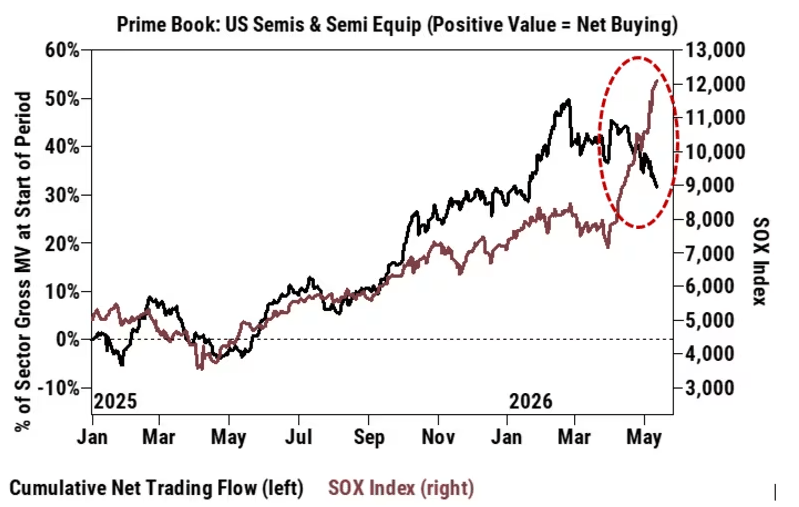
US semiconductor stocks were collectively net sold by hedge funds during the SOX's +59% rally from the March lows — based on Goldman Prime data. The people who know the industry best didn't buy the rip.
Source: Goldman Sachs
Nothing Is the Hedge
Nothing Is the Hedge
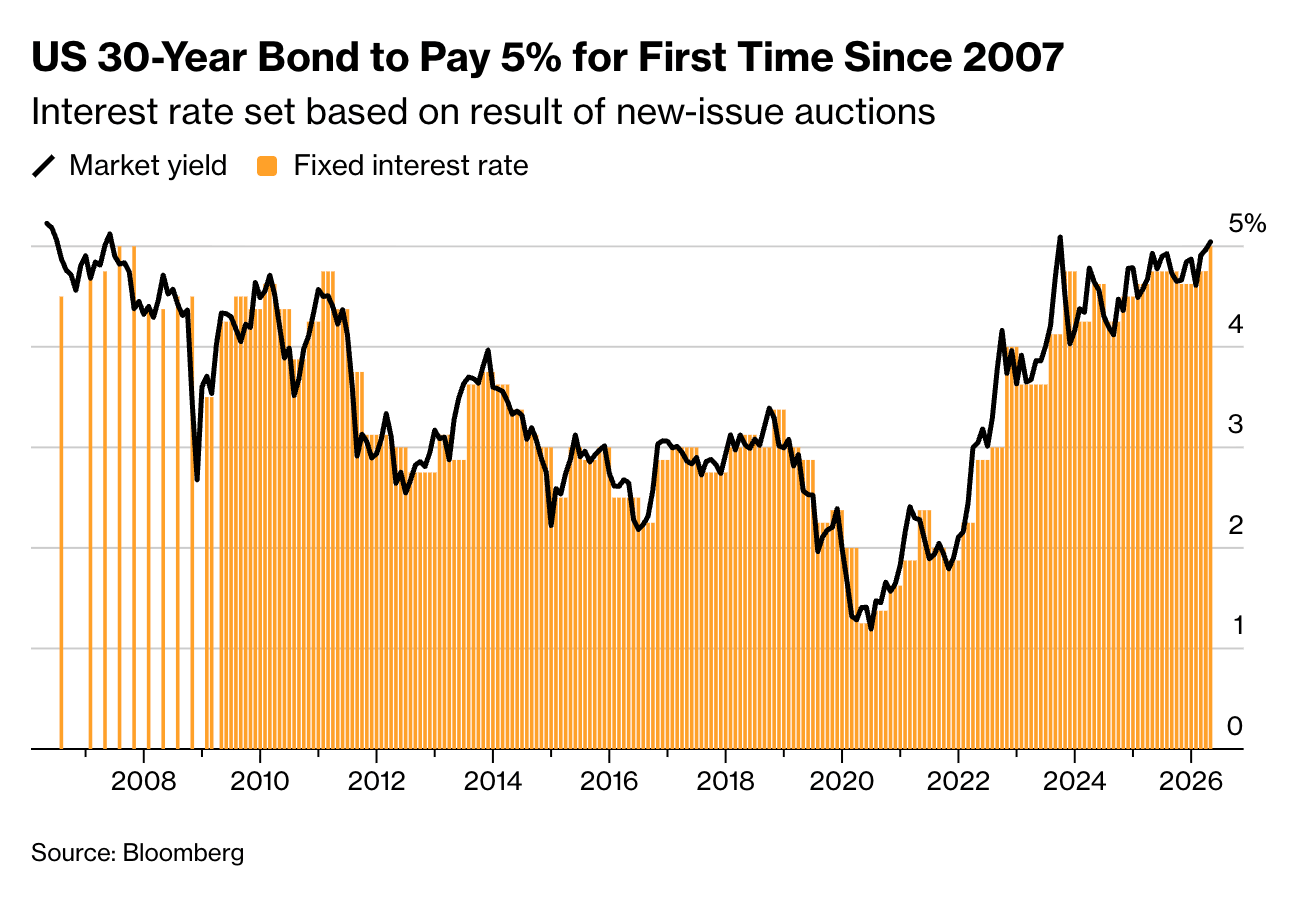
On May 15, bonds sold off (30Y yield hit 5.114%), stocks sold off (S&P -1.24%, Nasdaq -1.54%), silver sold off (-7% in a single session), and gold sold off. Four traditional safe havens. All red. Simultaneously.
Source: Bloomberg
Breakevens Off the Leash
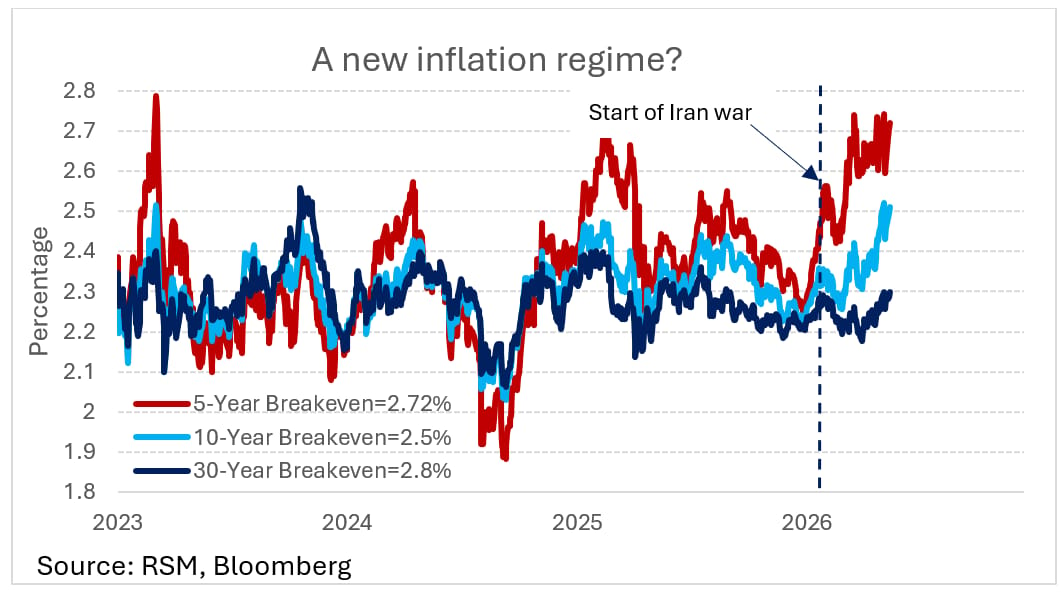
5Y inflation breakevens rose from 2.44% to 2.72% since late February; 10Y from 2.25% to 2.50% — both at their highest since early 2025. 1-year inflation expectations hit 3.26%, the highest since September 2022. The bond market is finally starting to price what the grocery store has known all year.
Source: Bloomberg
G7 Borrowing rates spike
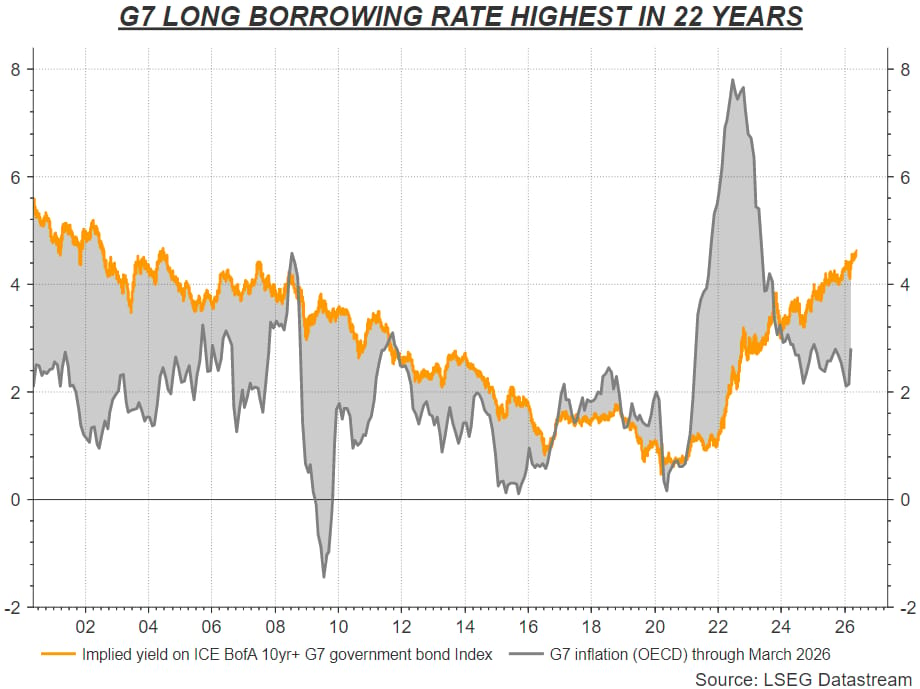
Debt, oil, inflation risk, and ebbing demand for long bonds are pushing G7 borrowing costs to levels not seen outside of crisis periods. 10y10y forward yields — the long-run rate expectations that drive mortgage rates and corporate investment — are at new cycle highs across developed markets simultaneously.
Source: Bloomberg
Three Forces, No Stable Orbit
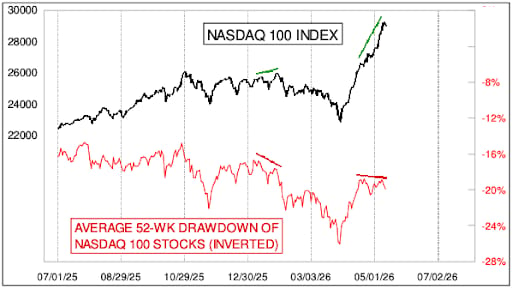
NDX at all time high- Avg Stock, not so much
The average Nasdaq 100 component is currently down 19.9% from its own 52-week high — essentially in a bear market — even while the index itself sits near all-time highs. The cap-weighted index is being dragged up by a handful of mega-caps while the median NDX stock is quietly in bear territory.
Source: Bloomberg
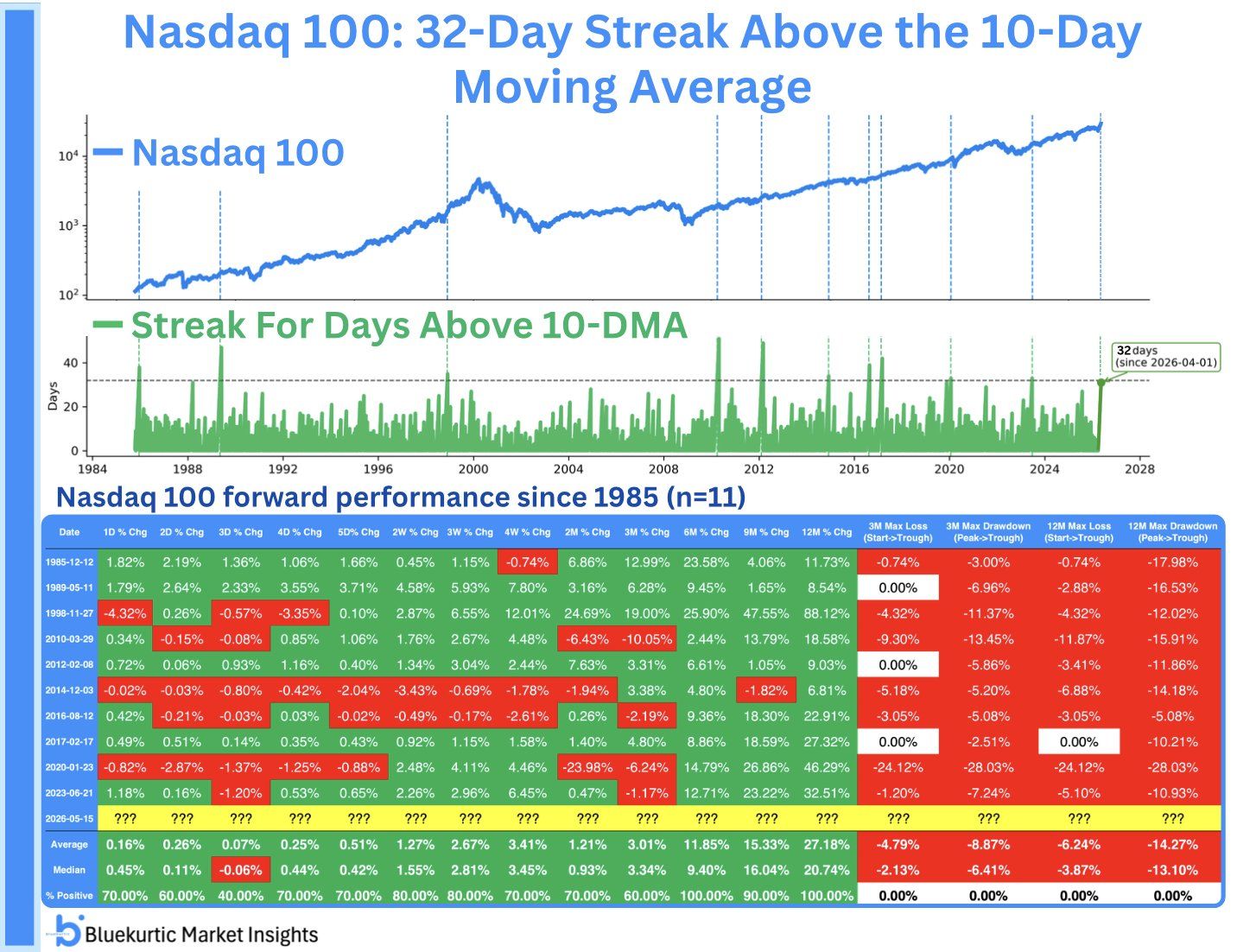
NDX Above 10DMA: 32 Straight Days
The Nasdaq 100 was above its 10-day moving average for 32 consecutive sessions — the 11th-best streak since 1985, with a 100% track record of positive 6-month forward returns in every prior instance. As of May 15, that streak is over.
Source: Bloomberg
Signal in the Noise
AI Jobs Narrative Won't Cooperate
Software engineer demand is rising despite AI automation, AI-exposed industries are showing above-trend wage growth, and product manager roles are at their highest level since 2022. The data doesn't fit the displacement story. Q1 2026 tech layoffs hit 81,747 — highest since Q1 2024 — yet demand for the exact roles being automated simultaneously hit multi-year highs.
Source: a16z
Just Because...
QWERTY Was Designed to Slow You Down
The QWERTY keyboard layout was engineered in the 1870s to slow typists down — not speed them up. Early mechanical typewriters jammed when adjacent keys were struck quickly, so the most common letter pairs were deliberately placed far apart. We have kept the layout for 150 years because it is what everyone knows.