

Volatility Pulse - They Finally Listened
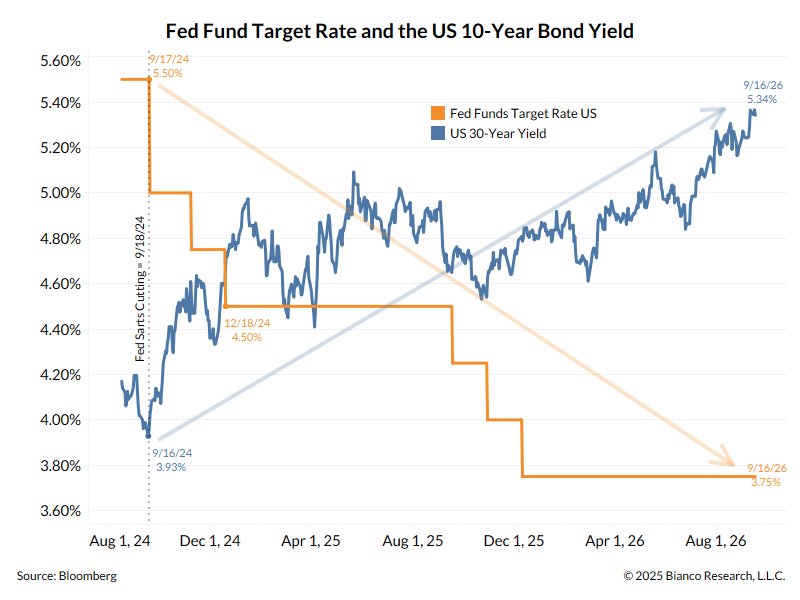
Fed funds went down. Your 30-year went up.
The Fed cut rates from 5.50% to 3.75% — a full 175 bps of easing. Over the same period the 30-year bond yield rose from 3.93% to 5.34%. The lines crossed. The cutting did not work the way it was supposed to.
Source: Bianco Research
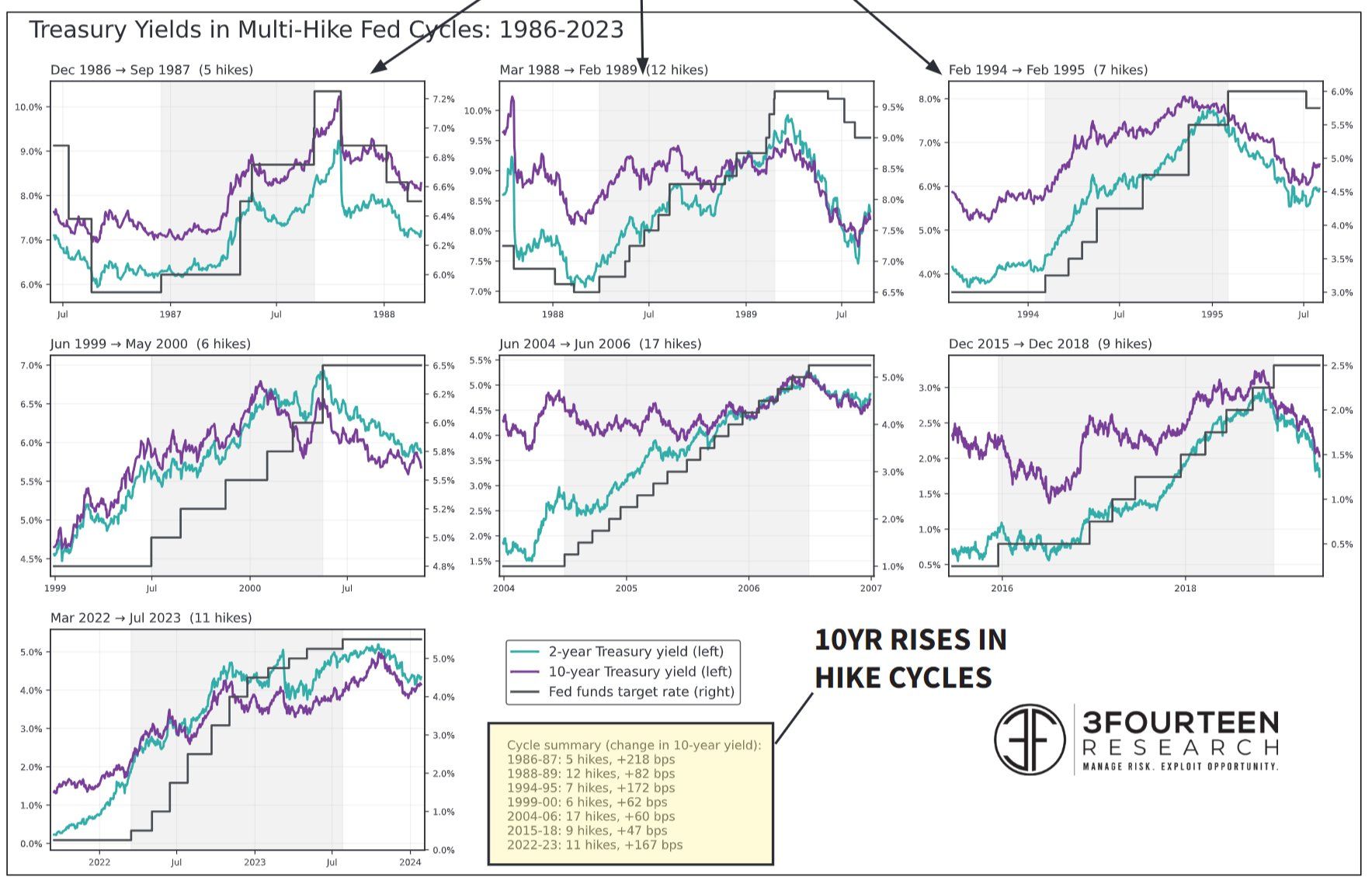
Every hike cycle ends the same way
In all 7 hiking cycles since 1986, the 10-year yield rose — by anywhere from +47 to +218 bps. Every single one. If history holds, 5% may not be the ceiling for this move.
Source: 3Fourteen Research
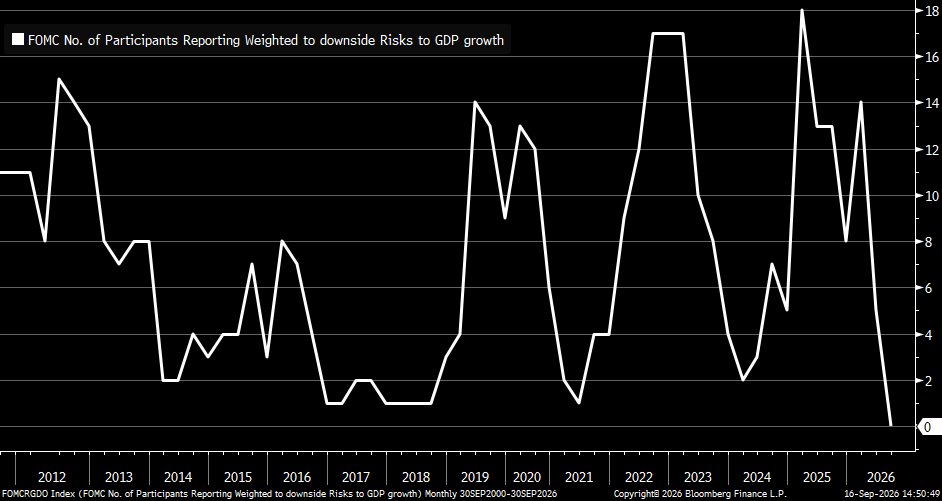
Zero Fed members see downside risk to GDP
For the first time since the Summary of Economic Projections started being published, not a single FOMC member sees downside risk to GDP growth. Every single Fed official is projecting the same direction: up. This has never happened before.
Source: Federal Reserve via Kevin Gordon
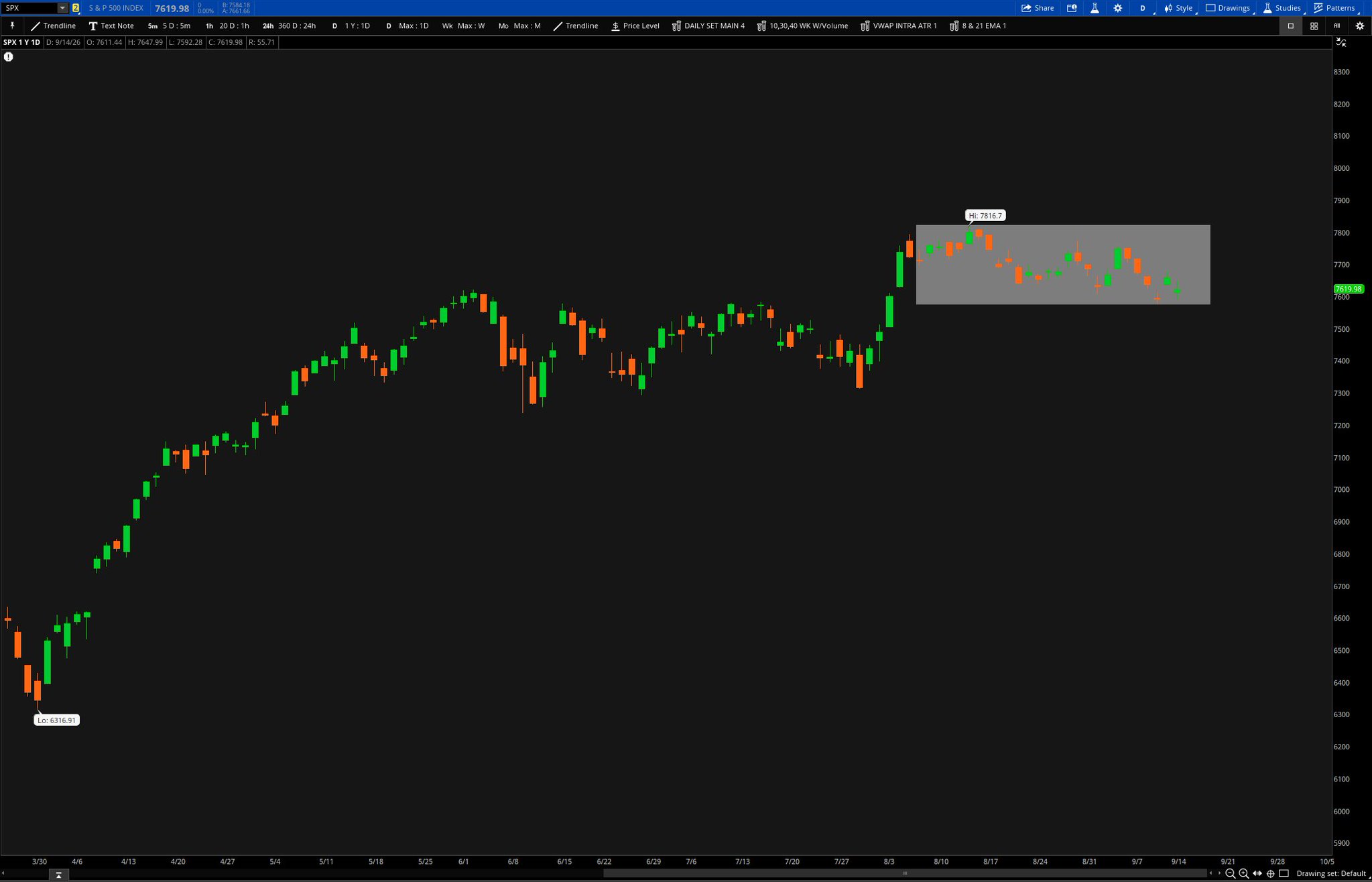
27 straight sessions inside 1%
The S&P 500 has gone 27 consecutive sessions without a greater-than-1% intraday band. The Nasdaq is at its tightest Bollinger Band width in months — and within 5% of an all-time high. All while the 10-year sits at 5%, oil is above $125, and the Fed just hiked today.
Source: Connor Bates
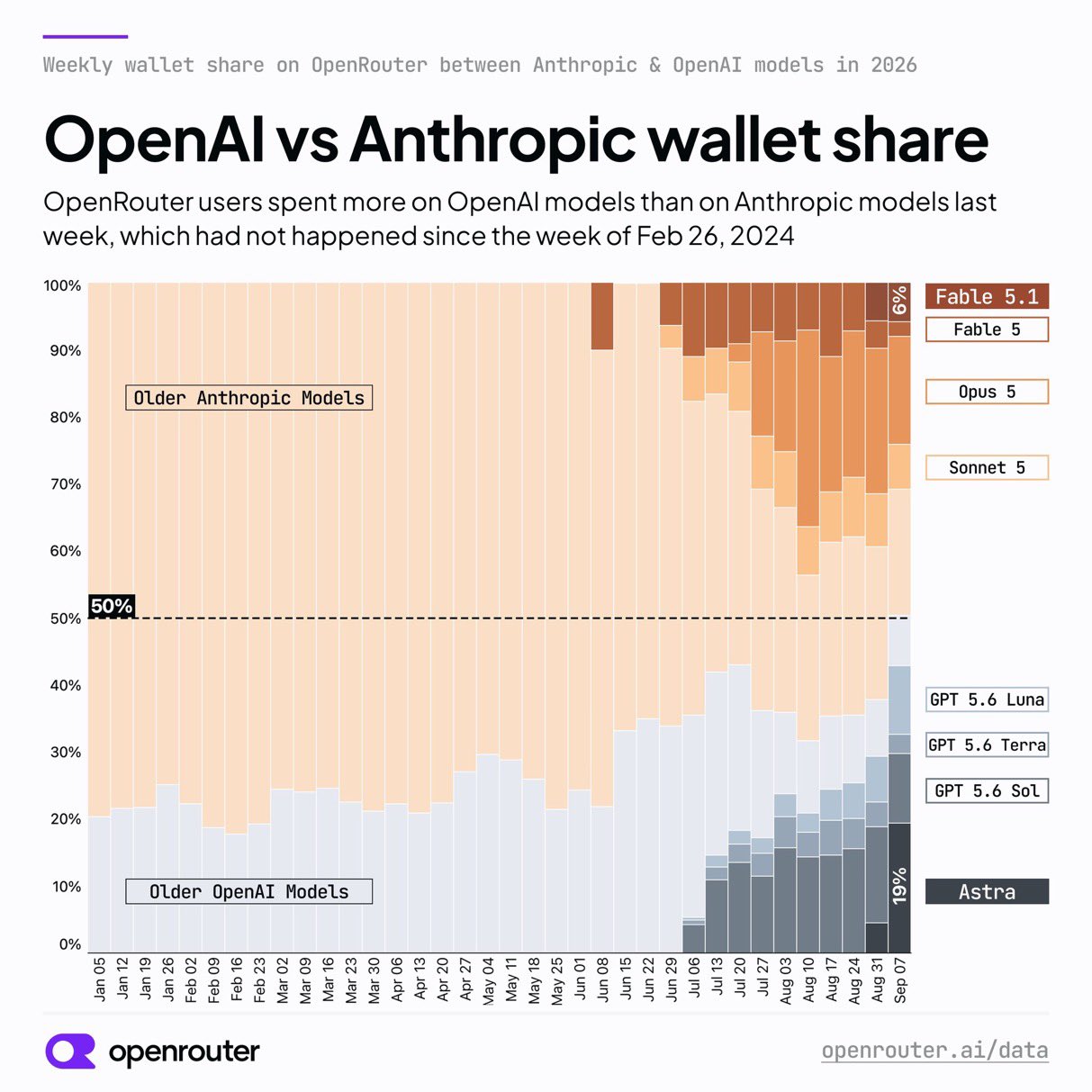
OpenAI just went from 20% to 50% share
Per OpenRouter data, OpenAI went from 20% to 50% wallet share vs. Anthropic since June — while Anthropic fell from 80% to 50%
Source: Gavin Baker via OpenRouter
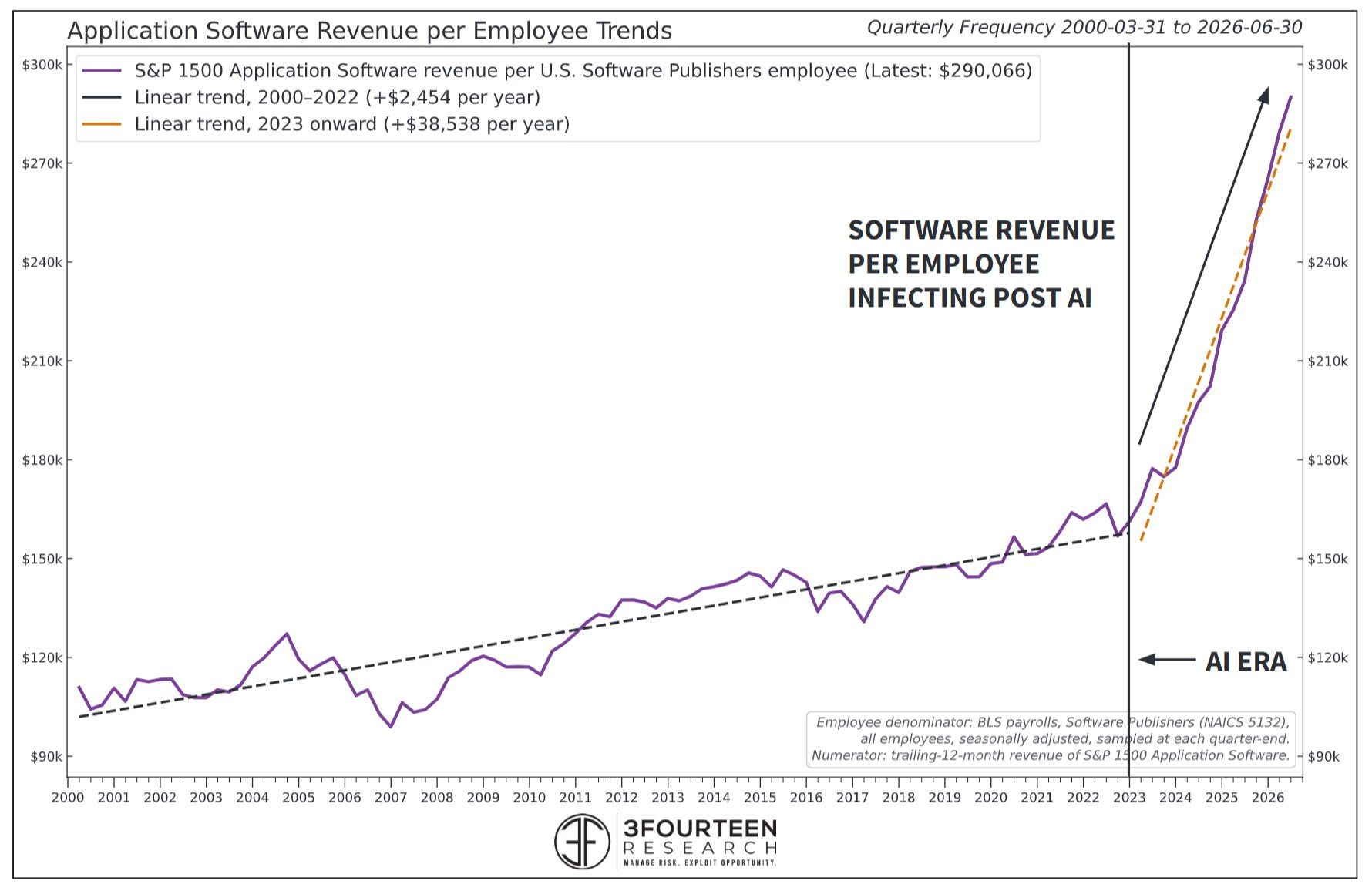
Software revenue per employee went parabolic
Application software revenue per employee jumped from around $110K pre-AI to $290K today — and the trend is still accelerating. The AI productivity gain is showing up not as layoffs but as dramatically higher output per person.
Source: 3Fourteen Research
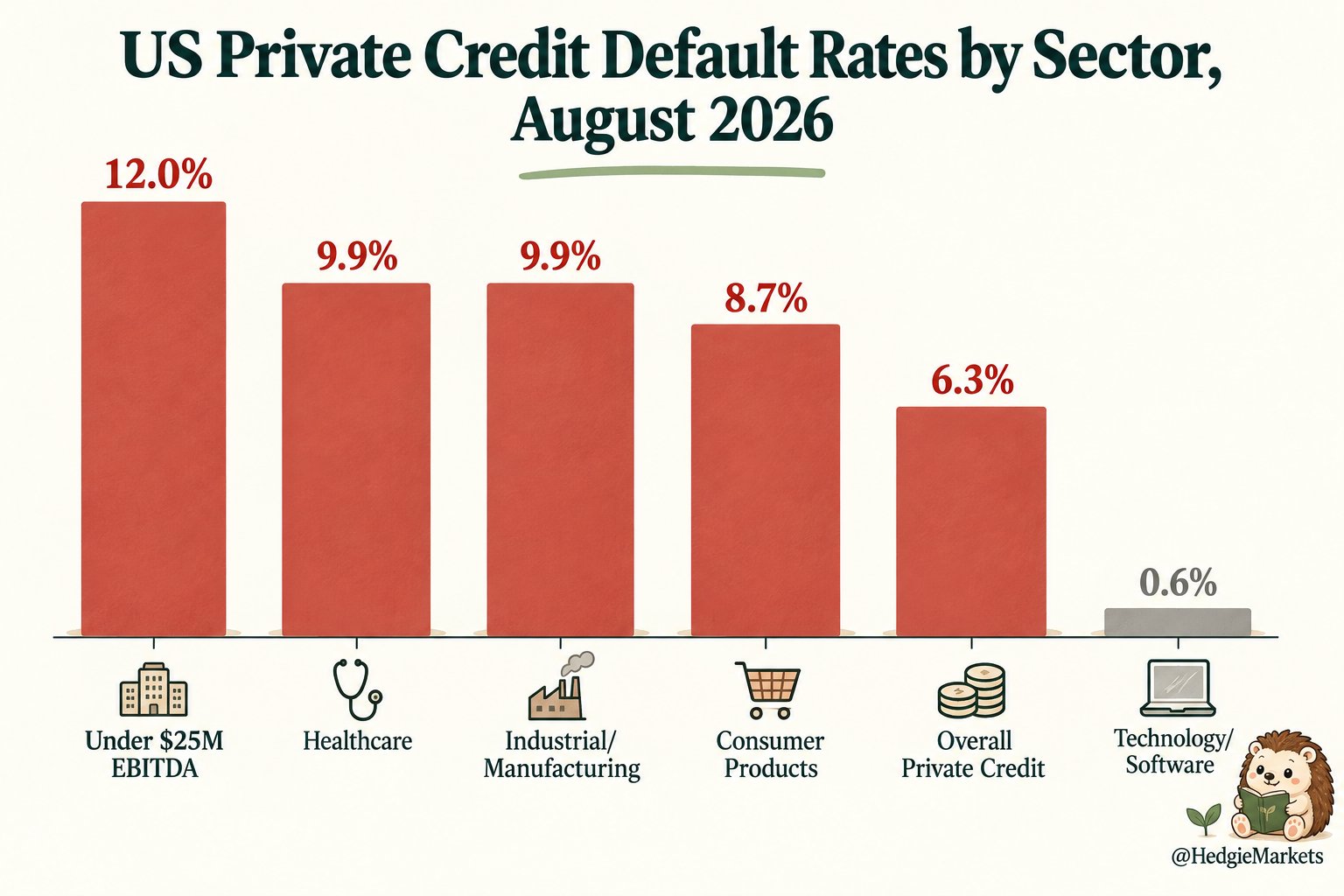
Private credit default rate: record fifth straight month
US private credit default rate hit 6.3% in August — a record for the fifth consecutive month. Healthcare and industrial manufacturing both at 9.9%. Small companies (under $25M EBITDA) at 12%. Nearly half the defaults were companies switching to IOU payments because they could not pay cash interest. Every floating-rate loan just got more expensive.
Source: HedgieMarkets via Fitch Ratings
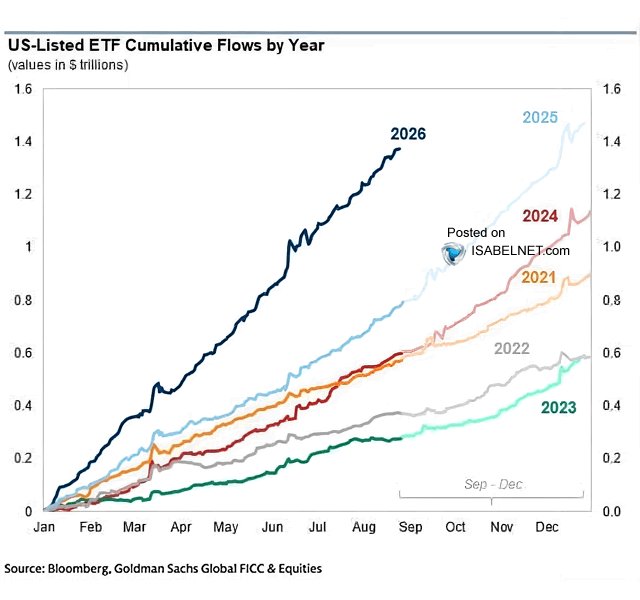
US ETFs on pace for $2.3 trillion this year
Investors have poured $1.4 trillion into US-listed ETFs so far in 2026 — a record for this point in the calendar year. On current pace that projects to $2.3 trillion for the full year, shattering the 2025 record.
Source: Goldman Sachs
Consumer stocks at their lowest S&P weight ever
Consumer stocks (discretionary + staples combined) now make up less than 15% of the S&P 500 — the lowest weighting ever recorded, down from over 30% pre-dot-com. The index has never been more concentrated away from the companies that sell people things.
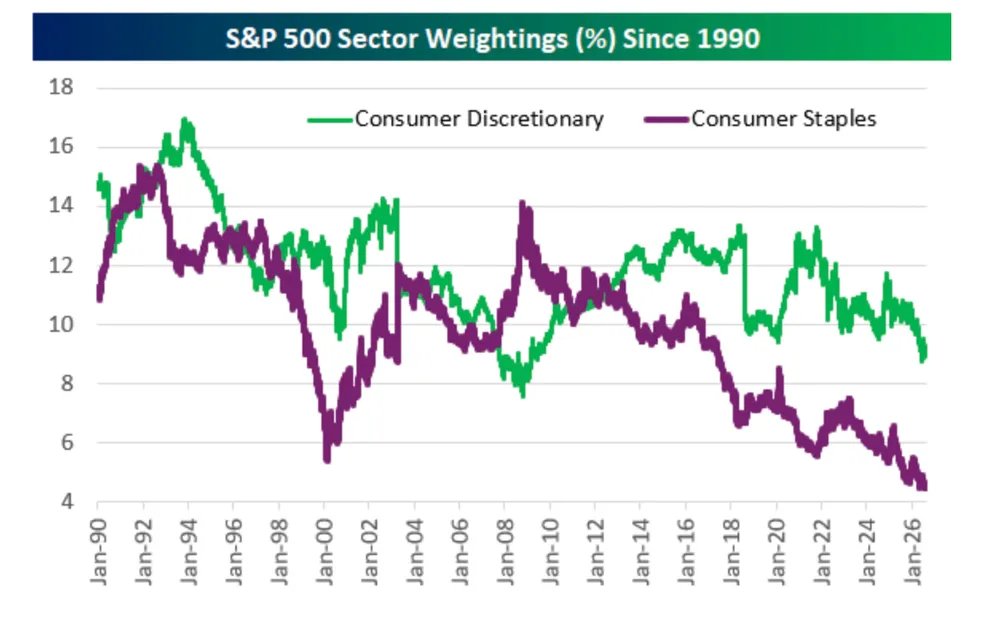
Source: Bespoke Investment Group via LJKawa
Semiconductors drive everything now
On days when semiconductors go up, the S&P 500 returns +59.3% annualized. On days when semis go down, the S&P returns -29.7% — an 88-point spread. One sector has become the on/off switch for the entire index.
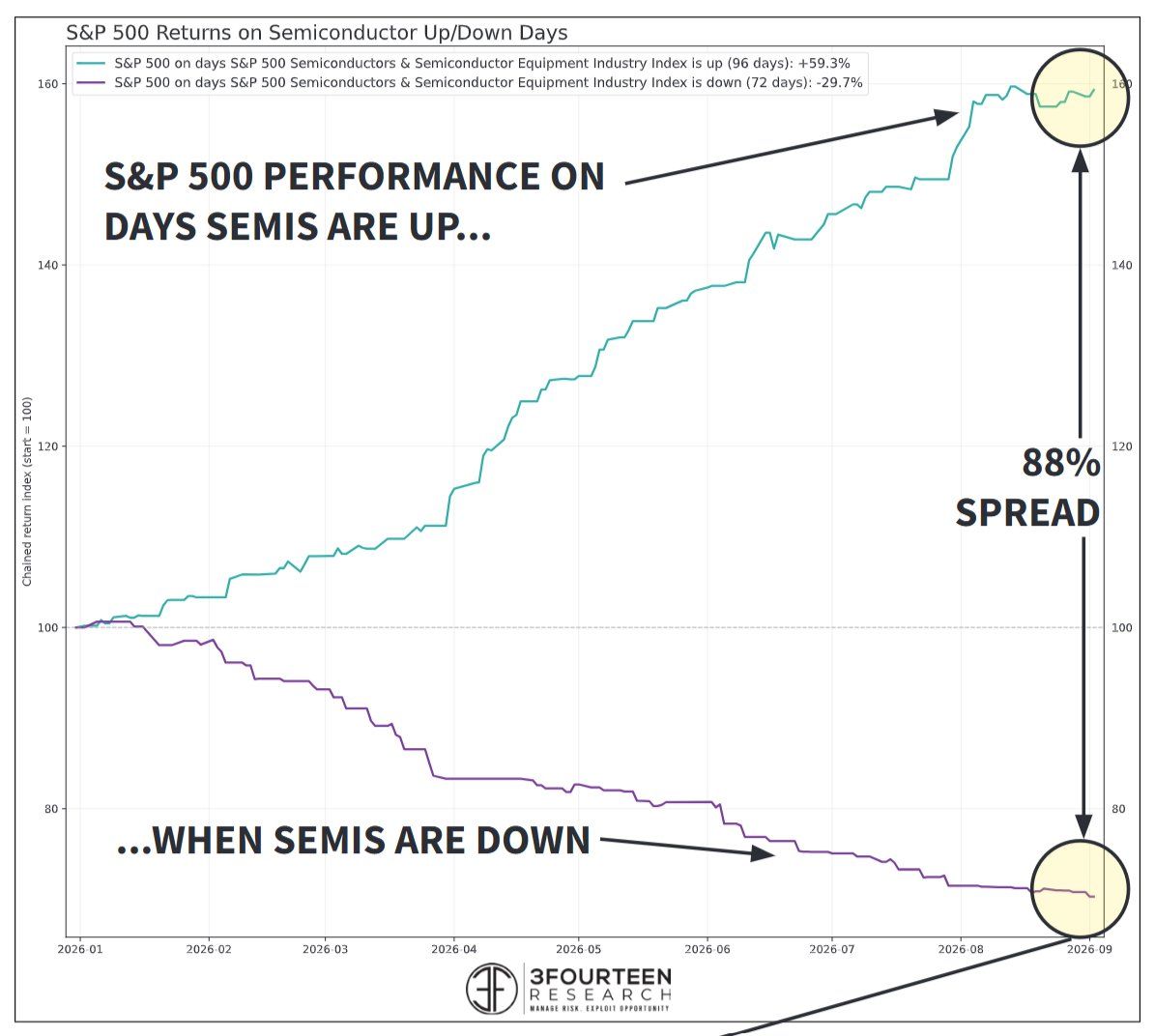
Source: 3Fourteen Research
Foreign buying of US stocks at an all-time high
Foreign holdings of US financial assets allocated to equities reached approximately 60% — near an all-time high, up from a low of around 20% in the 1970s. The world is still overweight American equities at the moment rates are hitting their highest levels in a generation.
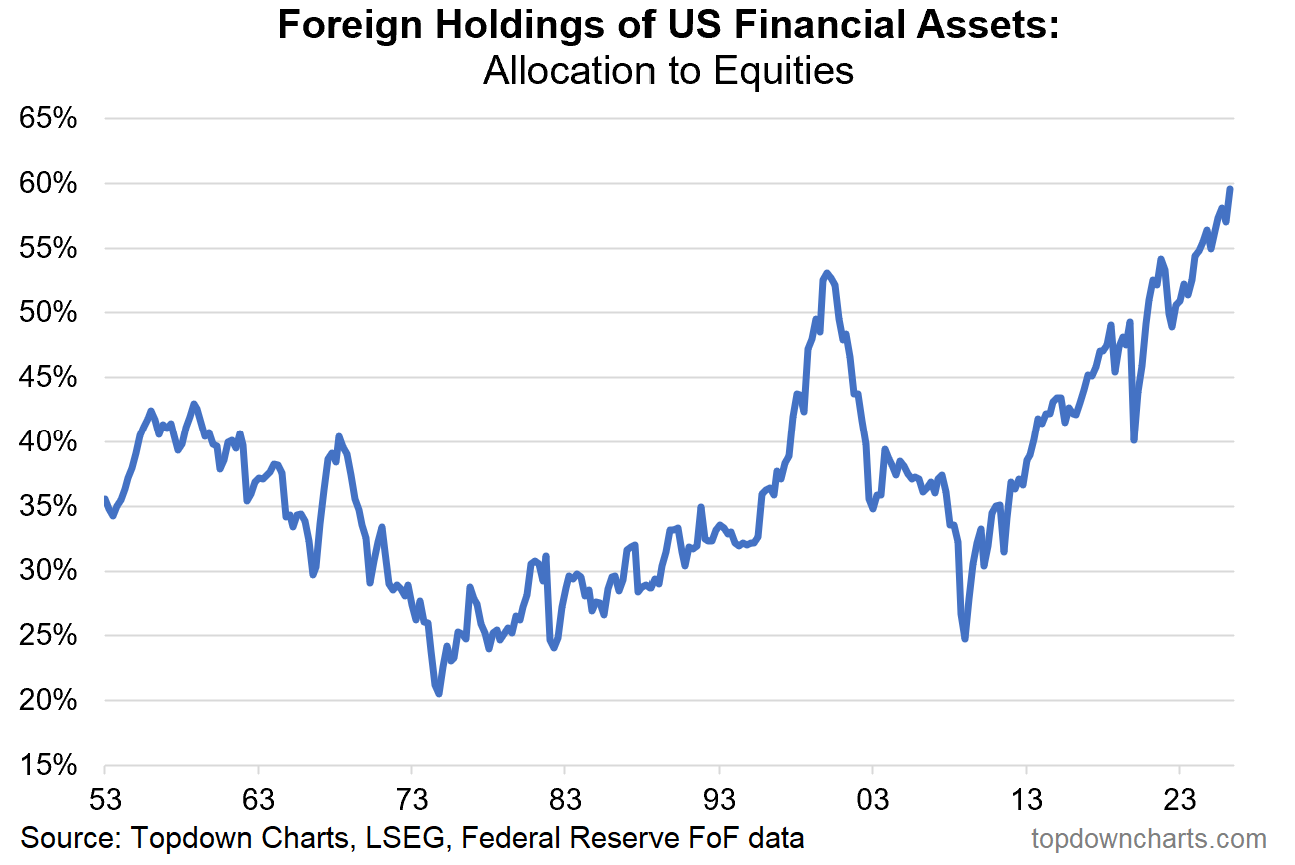
Source: Topdown Charts
Just Because...
A NASA Engineer Invented the Super Soaker by Accident
Lonnie Johnson holds over 120 patents, worked on the Galileo and Cassini space missions, and helped design the B2 stealth bomber. In 1982 he was building a better heat pump at home when a leak shot water across the bathroom. The toy version sold $200 million in its first year and was the best-selling toy on earth in 1992.