

RIA Ideas - Value Shopping
Growth Note · IWM / IWN
Small caps won this year. They're still priced like they didn't.
Small caps beat the S&P by eight points this year and still trade at lower multiples: IWM at 18.6x and small-cap value (IWN) at 14.9x, against 25.9x for SPY (Yahoo Finance, 8/18/2026).
The discount survived the rally because the estimates keep climbing. Russell 2000 earnings are forecast up 45% next year against 12% for the S&P (Goldman Sachs, 8/16/2026).
Winning, Cheaper, And Growing Faster
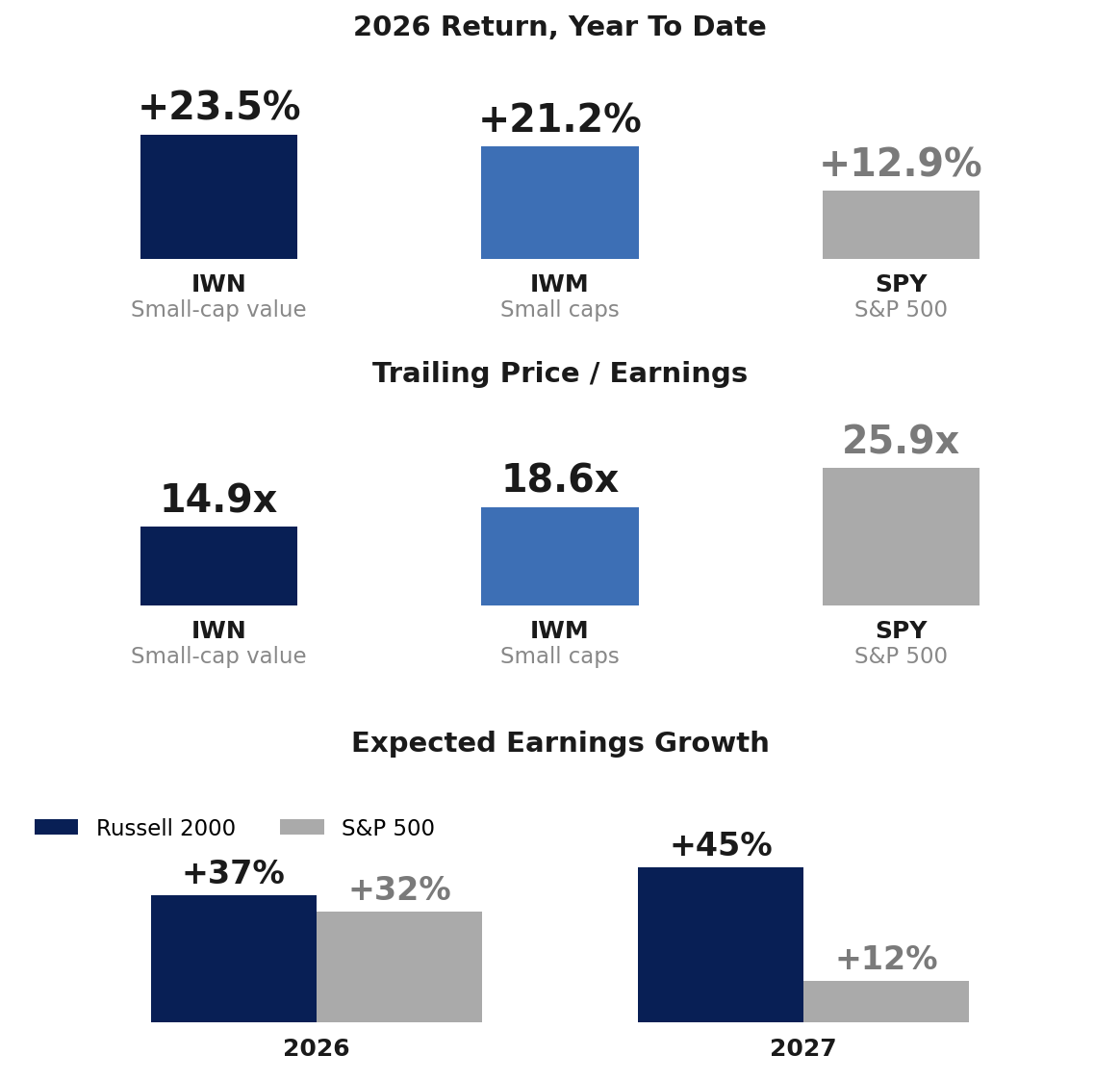
Data: Yahoo Finance as of 8/18/2026; earnings estimates Goldman Sachs as of 8/16/2026 · marinelayeradvisors.com/insights
5-Year Growth Note
IWM (Russell 2000)
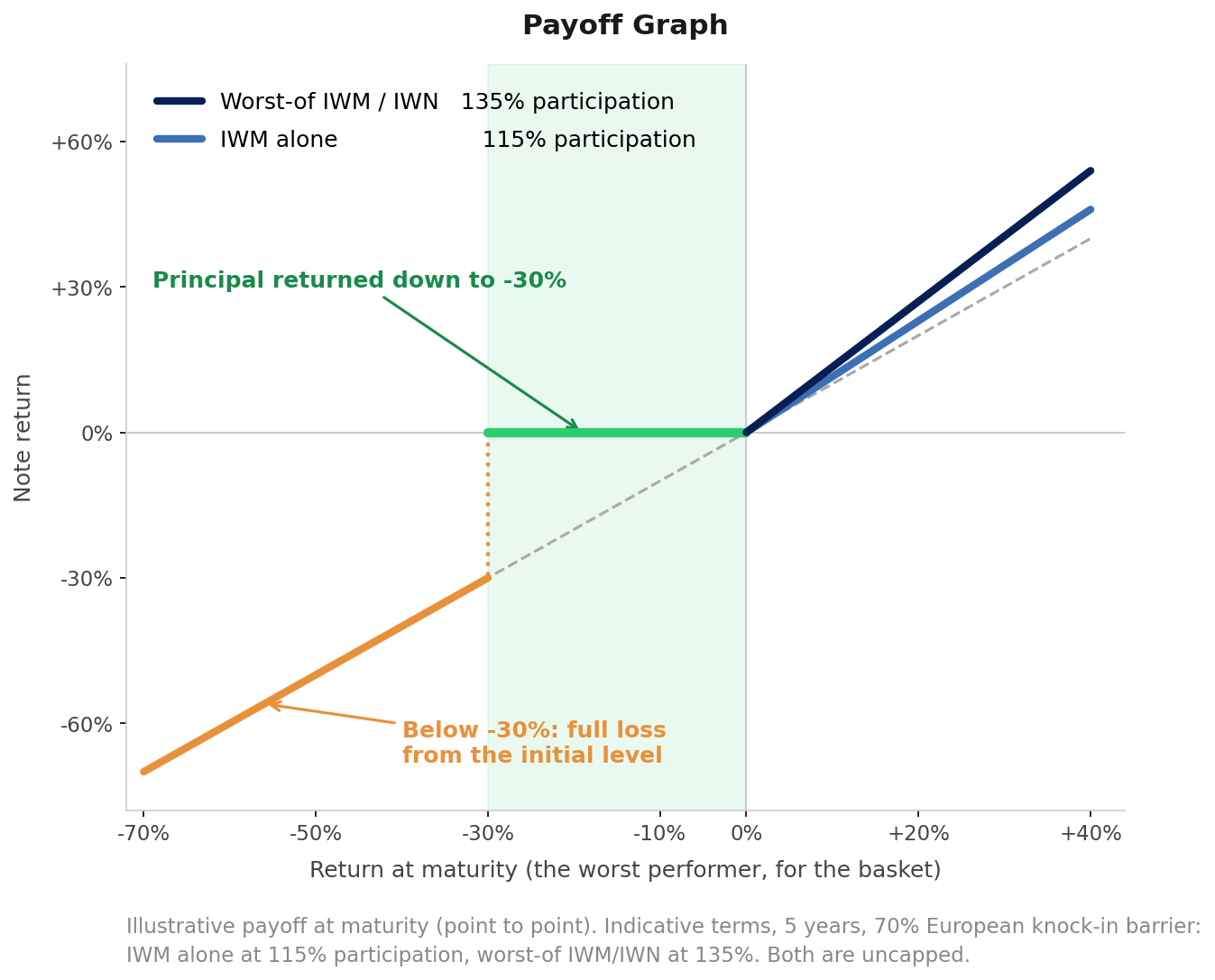
Upside participation | 115% of IWM's gain, no cap |
Downside protection | 70% barrier at maturity |
5-Year Growth Note
Worst-of IWM / IWN (adds small-cap value)
Upside participation | 135% of the worst performer, no cap |
Downside protection | 70% barrier at maturity |
Both may return principal in full if the underlier finishes at or above 70% of its starting level. Below that barrier the investor may participate in the full decline from the initial level, so a 40% fall may mean a 40% loss. Adding the value sleeve may raise participation by 20 points because the payoff then tracks whichever of the two performs worse.
Indicative levels only.
Want to see more thematic trades for your customers?
This material is for informational purposes only and does not constitute a recommendation. Data sourced from Yahoo Finance as of 8/18/2026 and Goldman Sachs as of 8/16/2026 and has not been independently verified. Earnings growth figures are analyst estimates and are subject to revision. Past performance is not indicative of future results. Structured notes involve risks including potential loss of principal. These notes provide contingent principal protection only: if the underlier (or, for the basket, the worst performer) closes below 70% of its initial level at maturity, the investor is exposed to the full decline from the initial level. Terms shown are indicative and subject to final pricing at trade. Structured note pricing is subject to issuer credit risk, market conditions, and availability at time of execution.