
RIA Ideas - The Trade no one is talking about
Growth Note · EUFN (Europe Financials)
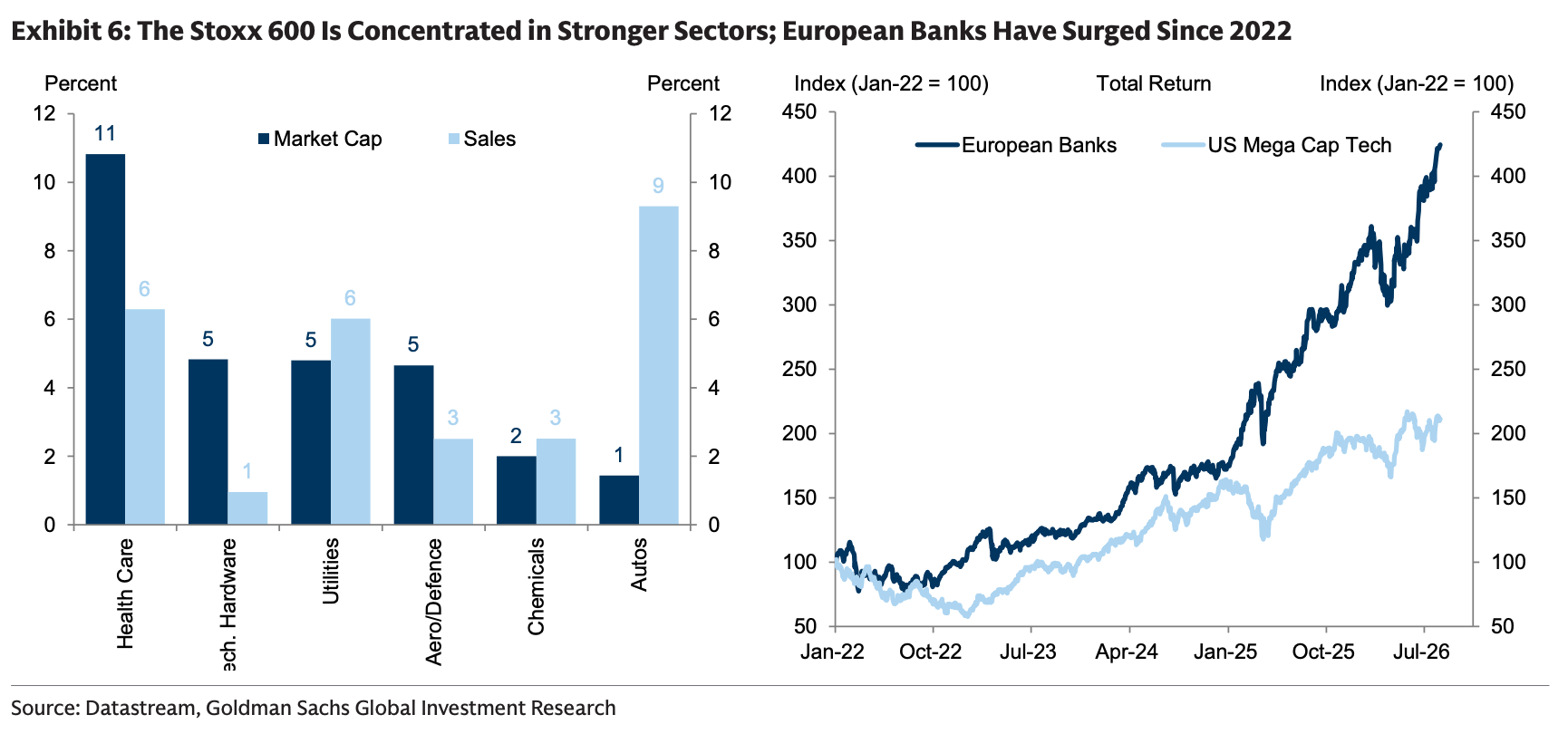
Everyone is in the AI trade, and since 2022 European banks have beaten it.
Since January 2022, XLK, the ETF for the S&P 500 Information Technology sector, returned 137% with dividends, through a tech crash and the whole AI boom. EUFN, the iShares MSCI Europe Financials ETF, returned 141% (Yahoo Finance, 1/3/2022 to 10/5/2026).
The last twelve months belong to tech: XLK is up 40% and EUFN 19%, and almost no client book has European banks in it. EUFN trades at 12 times trailing earnings against 36 for XLK (Yahoo Finance, 10/5/2026). A growth note on EUFN with 1.3 times the upside may be a way to add the trade that has quietly kept pace with AI.
The same two funds over every window, not only the one that flatters
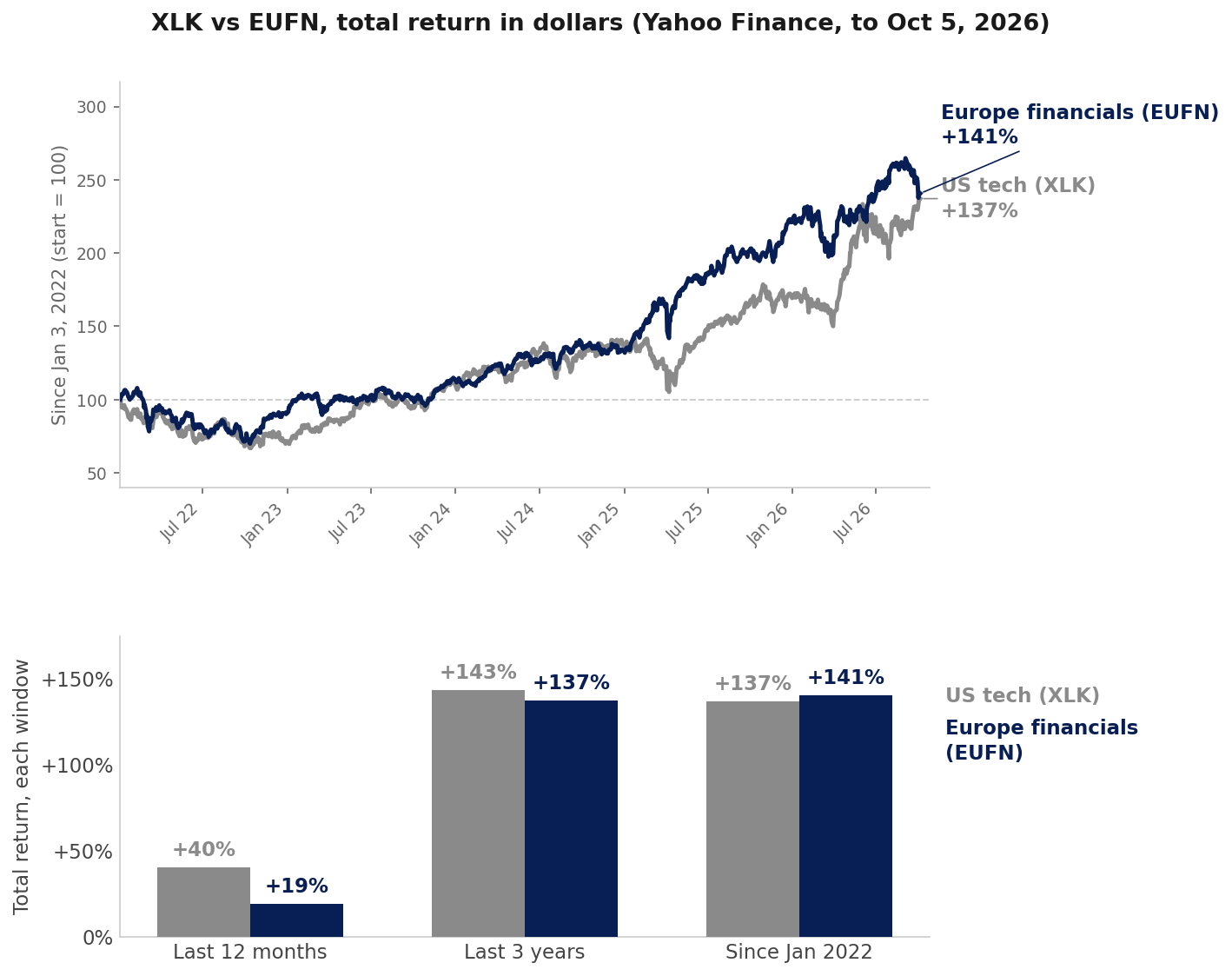
Yahoo Finance adjusted closes, dividends reinvested, in dollars, to 10/5/2026. The banks-versus-tech chart we ran in Volatility Pulse on 8/30/2026: Goldman Sachs Global Investment Research via Meb Faber · marinelayeradvisors.com/insights
They are built differently. XLK’s three largest names, NVIDIA, Apple and Microsoft, are 39% of the fund and its top ten are 64%, across 74 stocks (State Street holdings file, as of 10/2/2026). EUFN’s top three, HSBC, Santander and Allianz, are 21% and its top ten 45%, across 83 holdings, with two insurers, Allianz and Zurich, among them (iShares via Yahoo Finance, 10/5/2026).
Diversified, or all in the top names?
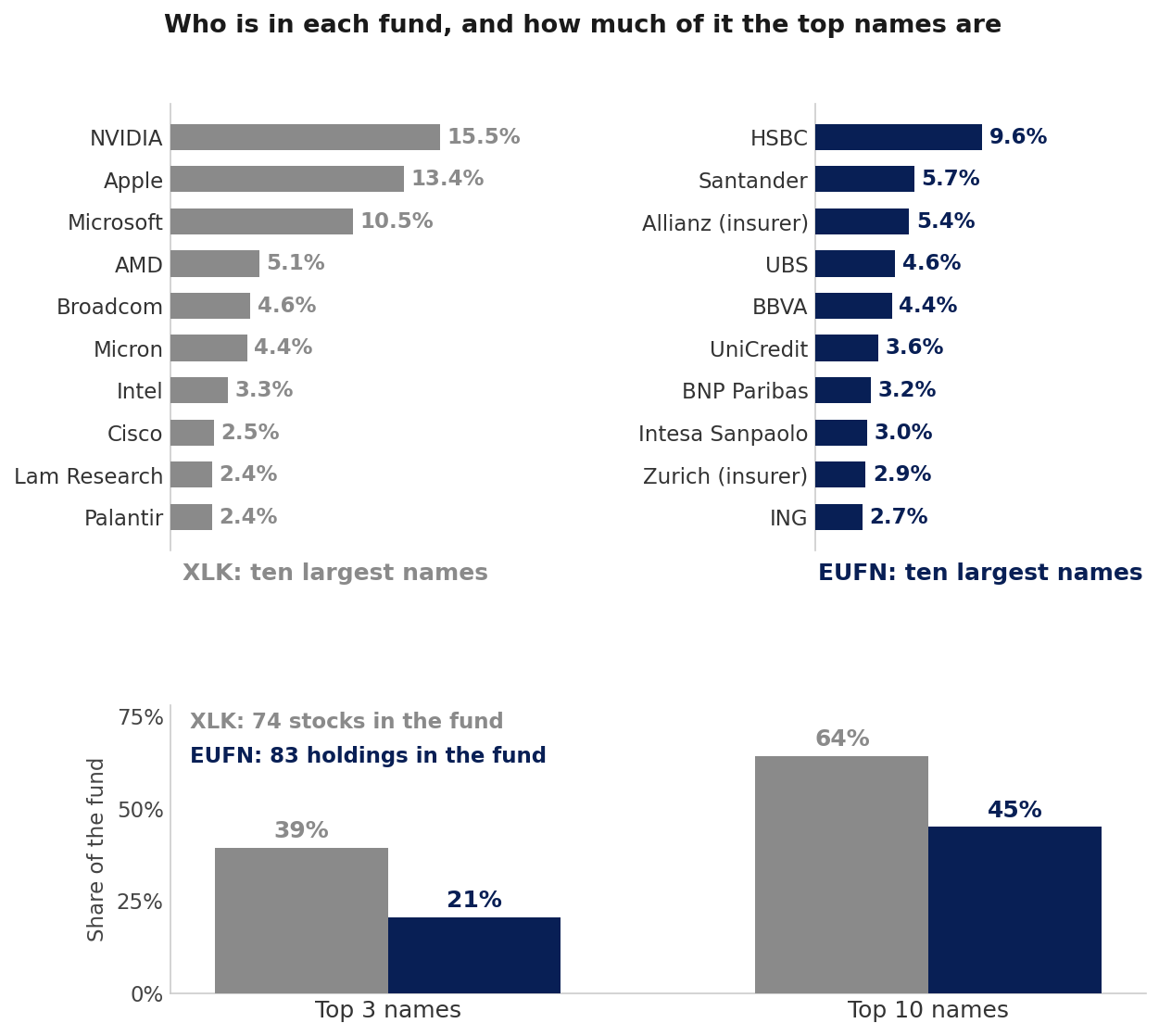
XLK: State Street daily holdings file, as of 10/2/2026. EUFN: iShares holdings via Yahoo Finance, 10/5/2026, and the iShares fund page for the holdings count.
Here is an example, indicatively priced by Morgan Stanley on 10/6/2026 (terms may change with market conditions):
3-Year Growth Note with a 70% Barrier
Morgan Stanley · EUFN (iShares MSCI Europe Financials ETF)
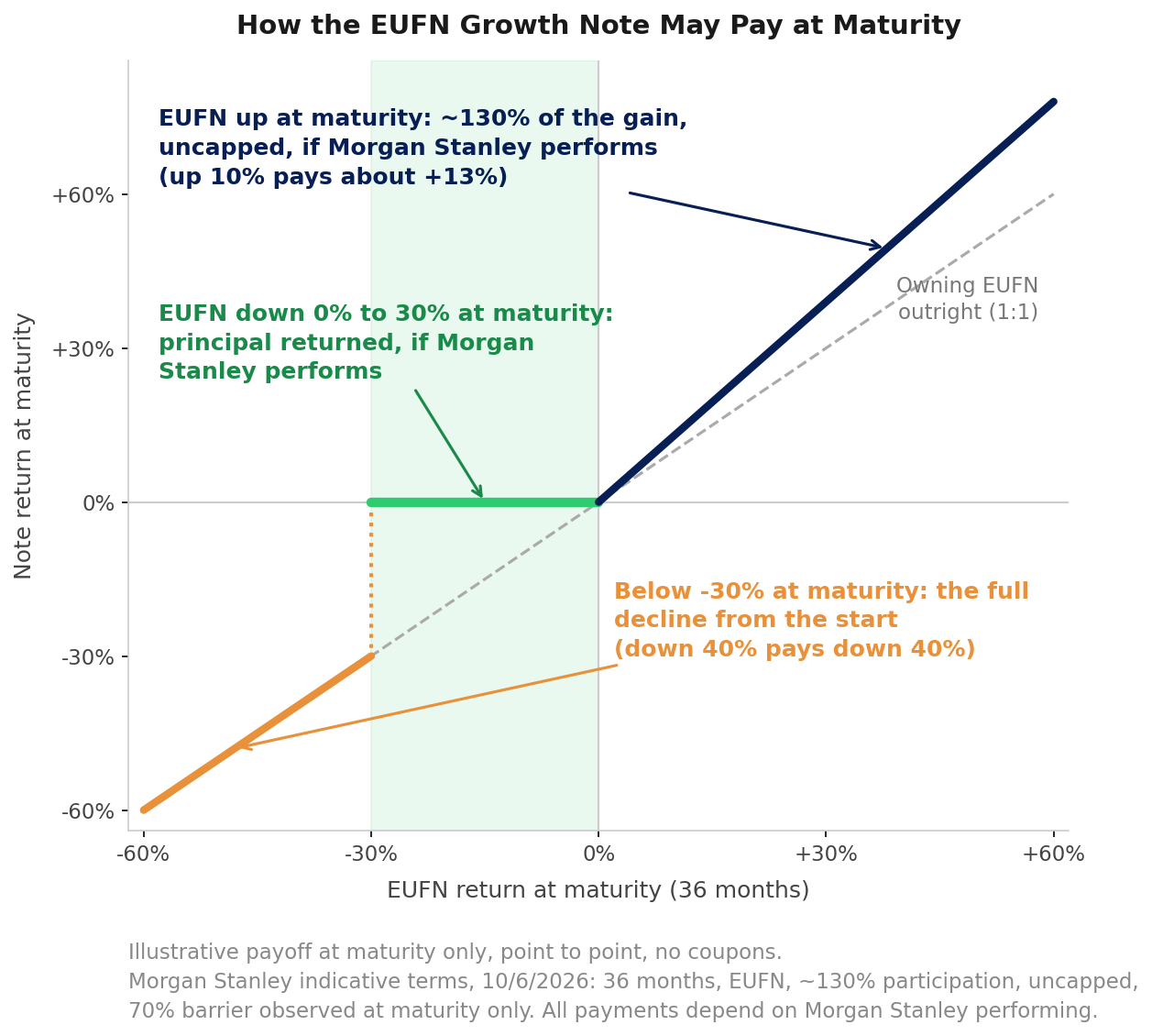
Upside at maturity | ~130% of any EUFN gain, uncapped, paid only at maturity (up 20% pays about 26%) |
Downside | 70% barrier, measured at maturity only. Principal returned if EUFN is down 30% or less; below that, its full decline from the start (down 40% pays down 40%) |
Principal | All payments on the note are obligations of the issuer and are subject to its credit risk. |
Coupons | None |
Tenor | 3 years |
Held to maturity, the note may pay ~130% of any EUFN gain with no cap, and may return principal with EUFN down as much as 30%, in both cases only if Morgan Stanley performs. A finish more than 30% below the start means the note takes EUFN’s full decline from the start, not just the part beyond the barrier, and nothing is paid before maturity. If the structure appeals but the fund does not, the underlier can be changed, subject to issuer availability at the time of pricing.
These were Morgan Stanley indicative levels priced on 10/6/2026. Pricing can vary depending on market conditions.
Here is how the note may pay at maturity:
Want to see more thematic trades for your customers?
Any investment decision must be based solely on the issuer’s prospectus and pricing supplement, which are available on request.
This material is intended solely for the recipient and may not be forwarded, reproduced or distributed to retail investors.
This material is for informational purposes only and does not constitute a recommendation or an offer to buy or sell any security. Return figures are our own calculation on Yahoo Finance adjusted closes (dividends reinvested, in dollars) for XLK and EUFN over the windows stated, ending 10/5/2026; the two funds track different sectors in different regions and the comparison is illustrative only. Price-to-earnings ratios are trailing, as reported by Yahoo Finance on 10/5/2026, and holdings are iShares’ as reported on the same date; EUFN holds insurers as well as banks, and holdings change over time. None of this data has been independently verified. All note terms shown are Morgan Stanley indicative terms as of 10/6/2026, are marked with a tilde where approximate, and are subject to change, final pricing, issuer availability and market conditions at the time of execution. Return of principal depends on the issuer performing its obligations in full. The notes are unsecured senior obligations of the issuer, are not insured or collateralized, and an issuer default or credit deterioration could result in the loss of some or all of an investment regardless of how EUFN performs. Principal is at risk: if EUFN finishes more than 30% below its initial level at maturity, the investor may lose 1% of principal for every 1% of its decline from the initial level, so the barrier offers no protection once it is breached. The notes pay no interest, are not listed on any securities exchange and may have limited or no interim liquidity. International investing involves additional risks including currency and geopolitical risk. Past performance is not indicative of future results. Structured notes involve risks including potential loss of principal and may not be suitable for all investors.