

RIA Ideas - All that Glitters
Income + Growth: Gold
Central banks now hold more gold than US Treasuries, for the first time since 1996.
Gold is now 27% of official central-bank reserve assets vs 22% for US Treasuries, the first time gold has been the bigger holding since 1996 (ECB, June 2026). And 89% of central banks expect to hold even more gold a year from now, the highest reading in the World Gold Council survey's history.
The price went the other way: gold is 24% below its January peak and the gold miners are down 36% from their highs (Yahoo Finance, 7/28/26). When structural buyers and sentiment sellers disagree this sharply, volatility tends to stay elevated, and elevated volatility is the raw material an income structure may convert into coupon.
The Official Safe Haven Changed, and the Price Went on Sale
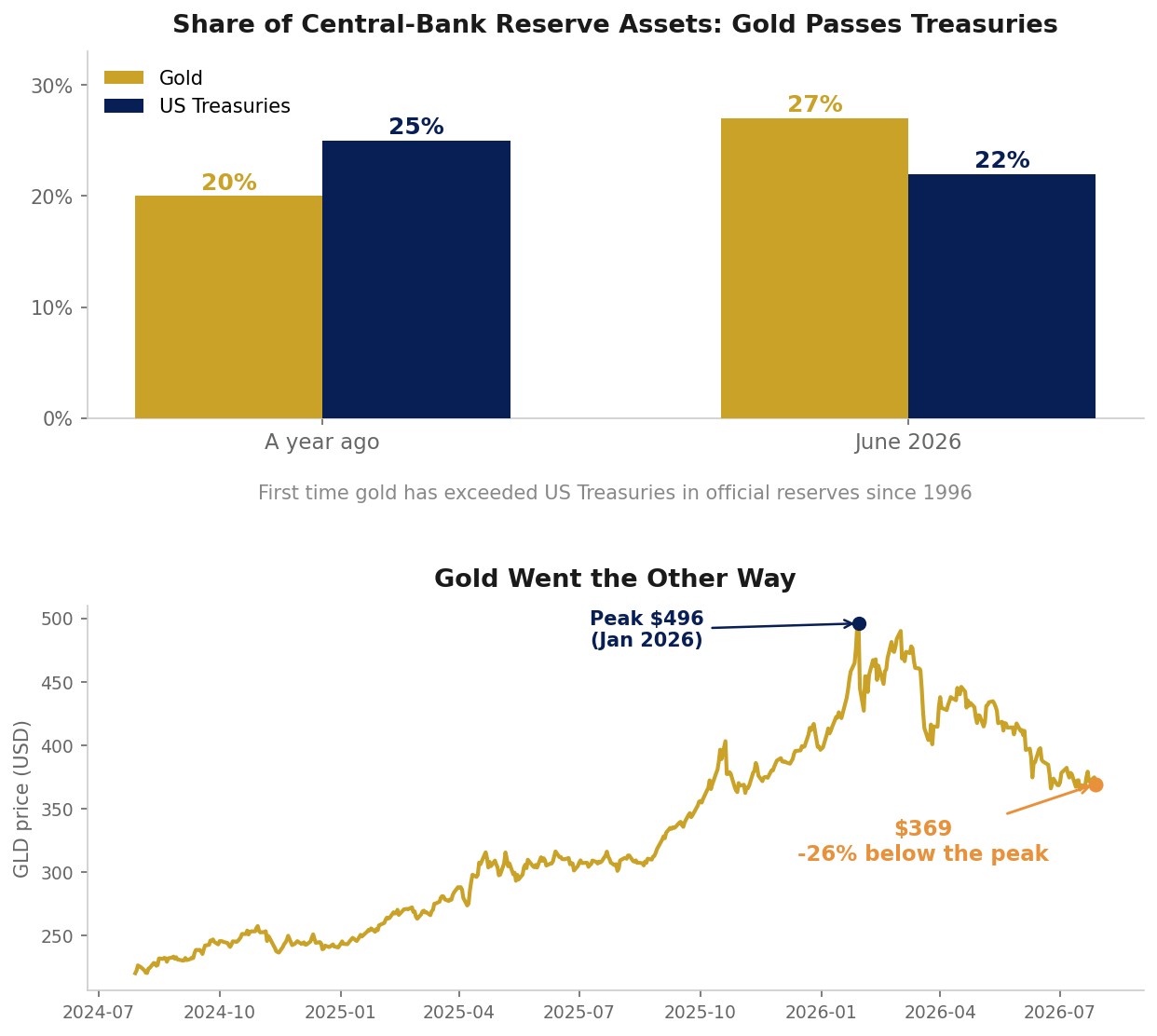
Data sourced from the European Central Bank, World Gold Council, and Yahoo Finance as of 7/28/2026 · marinelayeradvisors.com/insights
Ways To Express A Constructive View
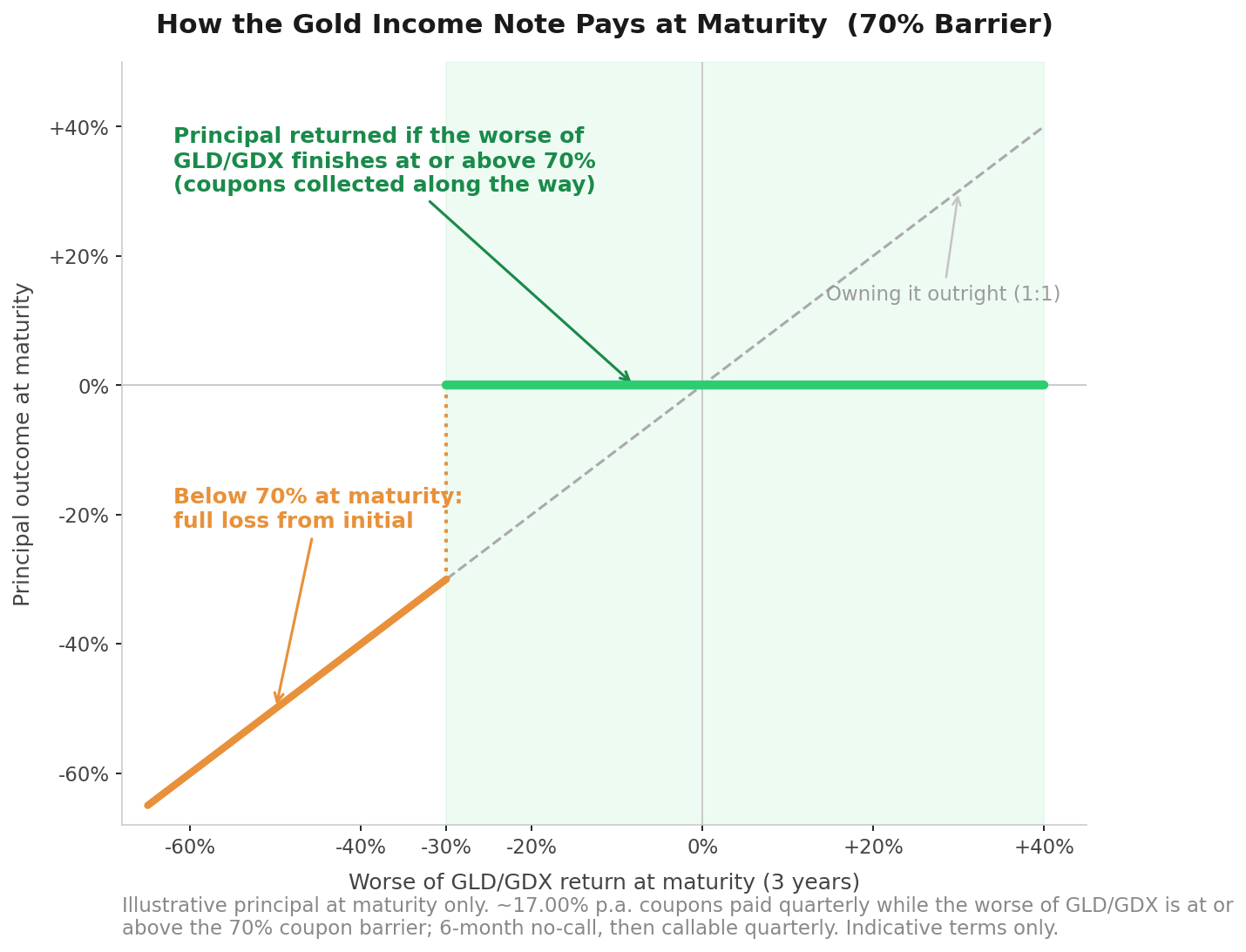
Gold Income Note · 3 Years · Worst-of GLD / GDX · ~17.00% p.a. paid quarterly · 6-Month No-Call, then Callable Quarterly · 70% Barriers
Quarterly coupons accrue while the worse of gold (GLD) and the gold miners (GDX) is at or above 70% of its initial level. The note cannot be called for the first six months, then may be redeemed quarterly. At maturity, principal may be returned in full provided the worse performer hasn't fallen more than 30%; below the 70% barrier, the investor may participate in the full decline from the initial level.
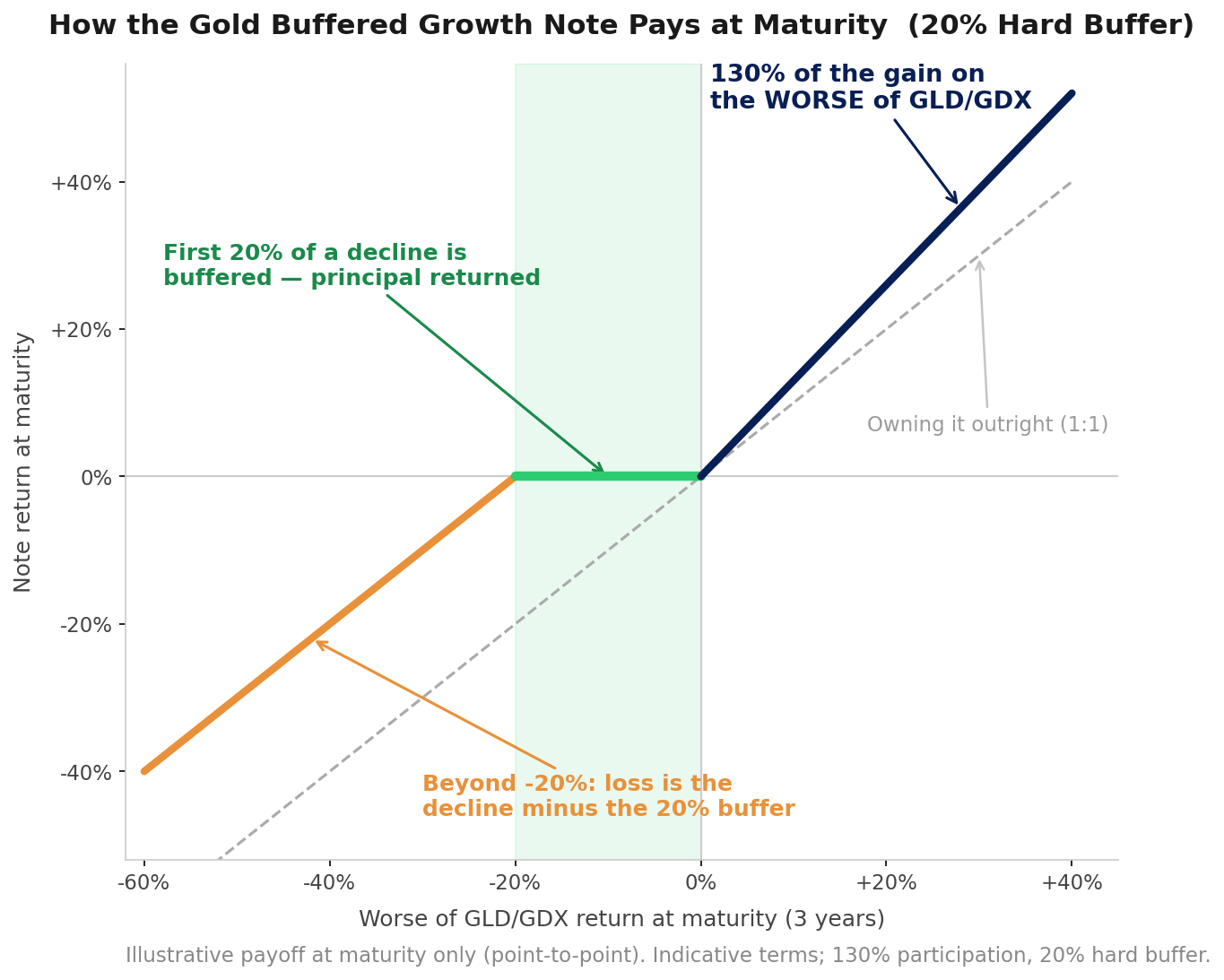
Gold Buffered Growth · 3 Years · Worst-of GLD / GDX · 130% Participation · 20% Hard Buffer
130% of any gain in the worse performer of GLD and GDX over three years. The first 20% of any decline at maturity is absorbed by the hard buffer; losses beyond 20% are borne by the investor.
Indicative levels only. Respond back and I'll get current terms from desk.
Here's how the income note pays at maturity:
And the buffered growth note:
Want to see more thematic trades for your customers?
This material is for informational purposes only and does not constitute a recommendation. Data sourced from the European Central Bank, World Gold Council, and Yahoo Finance as of 7/28/2026 and has not been independently verified. Past performance is not indicative of future results. Structured notes involve risks including potential loss of principal. The income note provides contingent principal protection only: if the worst underlier closes below the barrier at maturity, the investor is exposed to the full decline from the initial level. Buffered notes provide limited downside protection; losses beyond the buffer are borne by the investor. Structured note pricing is subject to issuer credit risk, market conditions, and availability at time of execution.